الوصيّة
Al-Wasiyyat — The Will
Mirza Ghulam Ahmad (as) · 24 December 1905
One-minute summary
The argument in brief
Al-Wasiyyat locates the Second Power in Allah’s action: He manifests it after the prophet passes away, when trials shake the community and its opponents become dominant (¶¶17–20). The Power is everlasting; on this reading, its personal manifestations recur in divinely appointed spiritual seasons. As ¶36 states, “And after me, there will be some other beings who will be a manifestation of the Second Power.” During an absence, consensus-authorized caretakers preserve communal work (¶¶37–41). On this reading, at the Second Manifestation’s appearance, they should serve subordinately.
Paragraphs 42–43 give the specific great revelation and glad tiding about a person from the author’s zurriyyat, marked by nearness, revelation, spiritual fruit and appointed recognition. Barahin-e-Ahmadiyya, Part IV and Haqiqat-ul-Wahi show that zurriyyat can denote spiritual progeny without excluding biological descent. Paragraph 47 gives the general rule this promised servant fulfils. On this interpretation, every righteous and faithful follower lies within the possible field of Allah’s choice; only Allah’s selection and the promised marks make one the Second Manifestation. His commission must become recognizable through responsible words or unmistakable action. Institutional rank is optional; reform and restoration of tawhid remain primary.
Begin the text Full executive summary Open the detailed evidence Go to ¶¶28–47
Executive summary — Divine Power and human administration
Executive summary
Divine Power and human administration
Al-Wasiyyat describes two manifestations of Divine Power. The first appears through a prophet during his lifetime. The second is shown by Allah after the prophet’s death, when grief, opposition and fear threaten the community. The Second Power is Allah’s renewed intervention; on the interpretation developed here, the Second Manifestation is the servant whom Allah raises as a personal manifestation of that Power. It is not an office, election or worldly rank.
The document also gives human beings a continuing administrative role. Righteous elders may receive bai‘at in the author’s name, and a footnote authorizes a person approved by forty believers. During an absence these custodians care for the communities as they pray for the Second Power and work together while waiting for the divinely raised servant. Consensus can appoint custodians, but it does not confer revelation, the Holy Spirit, nearness to Allah or guaranteed divine approval. When the Second Manifestation appears, the custodians are not abolished: they should continue in service subordinate to the divinely raised servant. As a practical inference, if some refuse, he does not coerce them: separation does not elevate their consensus authority to divine authority, and his reforming mission continues independently. Nor is Allah’s choice confined to the custodians. On this interpretation, every righteous and faithful follower lies within the possible field of Allah’s choice; only Allah’s selection and the promised marks make one the Second Manifestation. Consensus authorization is neither a prerequisite nor the cause of divine raising.
Other passages speak of persons who will manifest the Second Power, connect the promise to Barahin-e-Ahmadiyya, describe a promised person from the author’s spiritual progeny who is distinguished by nearness and revelation, and direct believers to work together until someone receives the Holy Spirit from Allah and stands up. On the reading argued here, the promised descendant and the person who stands up are the same servant. Both descriptions are singular, future-facing and dependent upon Allah; their spiritual marks—revelation, nearness and the Holy Spirit—belong together, and both passages make the community wait for the divine event.
The resulting interpretive sequence is: the communities pray and work through consensus-selected custodians; Allah selects and prepares the promised servant; grants him nearness, revelation and the Holy Spirit; sends him into a reforming mission in which he is tested; makes his divine commission identifiable through words or unmistakable action; and brings recognition at the appointed time. Allah may later grant him a public office or worldly rank, but such a rank is optional and does not create or define the divine servant. His primary mission remains the correction of communal failures, the restoration of tawhid, and the spiritual renewal of the community.
A person holding communal office may independently be raised by Allah, but office or election neither creates nor proves his divine status. An identifiable claim of divine commission is essential, though it is not sufficient by itself. The person must indicate—through a responsible declaration or unmistakable action—that he acts under a commission from Allah, and that claim must be supported by revelation, nearness to Allah, noble character, signs, sustained divine support and beneficial spiritual fruits. Without both the claim and its evidence, the person may be a good administrator, preacher or worldly leader, but the text gives no basis for calling him a divinely raised reformer. A public office may later support his work, but it remains secondary to the reforming commission through which he corrects failures and helps restore tawhid.
Independent textual commentary
How to read this page
This page presents the original Urdu and Arabic passages, an English rendering, and concise thematic analysis. Each commentary note distinguishes direct textual observations from contextual inferences and interpretive limits. Links marked with paragraph symbols refer to the editorial paragraph numbers on this page.
Key terms. “Second Power” refers to Allah’s everlasting divine action. A “personal manifestation” is a servant through whom that Power becomes visible; “Second Manifestation” refers to the divinely raised servant considered in this commentary. “Caretaker” is editorial shorthand for a consensus-authorized elder and is not presented as a separate Urdu title.
Historical boundary. The controlling evidence is the 1905 text, the scriptural and historical examples it names, and the Barahin-e-Ahmadiyya promise it expressly cites. The author’s explanation of spiritual “Adams” and their spiritual progeny in Barahin-e-Ahmadiyya, Part IV, supplies the principal authorial parallel for zurriyyat; Haqiqat-ul-Wahi supplies a second lexical example. Later institutional settlements are not used to decide what these sentences meant when written. References to a possible later office or worldly rank are applications of the interpretation, not evidence controlling the meaning of the 1905 text.
This is an independent interpretation, not an official publication of Jamaat-e-Ahmadiyya. Allah’s Servants does not presently identify any individual as the Second Manifestation.
Source: Mirza Ghulam Ahmad (as), Al-Wasiyyat, written 24 December 1905. Paragraph numbering and highlighting on this page are editorial; cross-references use those editorial numbers.
Detailed evidence
Divine Power, caretaking and recognition
Open the full argument and textual-strength table
Al-Wasiyyat presents two manifestations of Divine Power. The first appears through prophets themselves (¶16). The second appears after a prophet’s death, when opposition, doubt and apostasy threaten the community; Allah then shows His Power and steadies it (¶¶17–20). This attribution of the decisive action to Allah is direct and repeated (¶14; ¶18; ¶23; ¶31).
The community is not passive during an absence. It prays for the Second Power (¶¶37–39), while pure-souled elders receive bai‘at in the author’s name and a person approved by forty believers is authorized for that defined task (¶¶40–41). “Caretakers” is useful interpretive shorthand for this absence-phase function. It does not mean that these people are erased, dismissed or automatically stripped of every service when a manifestation appears; the text states no such termination. They should then place their continuing service under the Second Manifestation because their consensus-based task is derivative, whereas Allah raises and equips the manifestation. As a practical inference, if some refuse, he does not coerce them: separation does not elevate their consensus authority to divine authority, and his reforming mission continues independently.
Paragraph 42 gives the specific promised tiding: Allah promises a person from the author’s zurriyyat, marked by nearness, revelation and religious fruit. Paragraph 43 explains the recognition of that promised person at the appointed time. Paragraph 47 is general in form: its indefinite Urdu koi (“someone/anyone”) states the rule that the community works together until a person receives the Holy Spirit from Allah and stands up. Read together, the special revelation identifies the promised fulfilment, while the general rule states the recurring communal principle.
On this reading, the everlasting silsila and the author’s plural “some other beings” support recurring personal manifestations from time to time, in divinely appointed spiritual seasons (¶30; ¶36). The Divine Power remains everlasting; the recurrence of its personal manifestations through successive persons—not the uninterrupted presence of one mortal person—is what makes the chain everlasting. The specific person of ¶¶42–43 is the promised fulfilment of the general rule in ¶47. The passages yield the sequence developed in this commentary: the community prays and works through its caretakers; Allah selects and prepares the promised servant; grants him nearness, revelation and the Holy Spirit; sends him into a tested reforming mission; makes his commission recognizable through a responsible declaration or unmistakable action; and brings recognition at the appointed time. On this interpretation, every righteous and faithful follower lies within the possible field of Allah’s choice, whether or not that person is a caretaker; only Allah’s selection and the promised marks make one the Second Manifestation.
| Stage | Principal cross-references | Status in this commentary |
|---|---|---|
| Communal prayer and caretaking during absence | ¶¶37–41; ¶47 | Direct textual instruction |
| Allah selects and raises the servant | ¶31; ¶42 | Direct divine agency |
| Nearness, revelation, the Holy Spirit and spiritual fruit | ¶42; ¶47 | Direct marks read together |
| Tested reforming mission | ¶42; Barahin-e-Ahmadiyya, Parts I–II | Interpretive synthesis from mission, opposition and fruit |
| Commission becomes recognizable through words or unmistakable action | ¶43; ¶47 | Interpretive requirement from recognition and standing up |
| Recognition at the appointed time | ¶43 | Direct textual statement |
| Assessment | Finding | Principal cross-references |
|---|---|---|
| Direct | Allah shows, sends and sustains the everlasting Second Power; its personal manifestations recur through more than one person. | ¶14, ¶¶18–19, ¶23, ¶31, ¶36 |
| Direct | Consensus authorizes a defined caretaking task: receiving bai‘at in the author’s name and modelling worthy conduct. | ¶¶40–41 |
| Direct | Paragraph 42 gives the specific promised tiding about a person; paragraph 43 explains that person’s recognition at the appointed time. | ¶¶42–43 |
| Strong inference | Paragraph 47 states a general absence-rule: its indefinite koi is naturally read within the recurring chain of manifestations described earlier. | ¶30, ¶36, ¶47 |
| Interpretive synthesis | The specific promised person of paragraphs 42–43 fulfils the general rule in paragraph 47. Every righteous and faithful follower lies within the possible field of Allah’s choice; only Allah’s selection and the promised marks make one the Second Manifestation. Caretaker status is neither necessary nor sufficient. | ¶¶40–47 |
| Interpretive sequence | Prayer and caretaking precede Allah’s selection and preparation of the servant; nearness, revelation and the Holy Spirit equip him; a tested reforming mission and an identifiable commission lead to recognition at the appointed time. The commission must become recognizable through words or unmistakable action. | ¶¶37–47 |
| Strong inference | When the Second Manifestation appears, continuing caretaking should be subordinate to it. Consensus grants a derivative task; Allah grants the divine commission. Subordination does not mean abolition. As a practical inference, those who refuse are not coerced: separation cannot elevate consensus authority to divine authority, and the reforming mission continues independently. | ¶31, ¶¶40–47 |
| Direct authorial usage | Barahin-e-Ahmadiyya defines obedient followers as spiritual progeny and calls messengers spiritual “Adams”; Haqiqat-ul-Wahi independently uses zurriyyat for a non-biological relationship. | Barahin-e-Ahmadiyya, Part IV; Haqiqat-ul-Wahi, p. 119 |
| Text leaves open | Whom Allah will select, the practical form of cooperation or separation after refusal, and whether zurriyyat in paragraph 42 is spiritual, biological, or both. | ¶¶40–47 |
Warnings, promises and the approaching end of the author’s life
بِسۡمِ اللّٰہِ الرَّحۡمٰنِ الرَّحِیۡمِ
نَحْمَدُهُ وَنُصَلِّي عَلَى رَسُوْلِهِ الْكَرِيم
اَلْحَمْدُ لِلَّهِ رَبِّ الْعَلَمِيْنَ وَالصَّلوةُ وَالسَّلامُ عَلى رَسُولِهِ مُحَمَّدٍ وَّالِهِ وَاَصْحَابِهِ أَجْمَعِينَ -
اما بعد چونکہ خدائے عزوجل نے متواتر وحی سے مجھے خبر دی ہے کہ میرا زمانہ وفات نزدیک ہے اور اس بارے میں اُس کی وحی اس قدر تواتر سے ہوئی کہ میری ہستی کو بنیا د سے ہلا دیا۔ اور اس زندگی کو میرے پر سر د کر دیا اس لئے میں نے مناسب سمجھا کہ اپنے دوستوں اور اُن تمام لوگوں کے لئے جو میرے کلام سے فائدہ اُٹھانا چاہیں چند نصائح لکھوں ۔ سو پہلے میں اُس مقدس وحی سے اطلاع دیتا ہوں جس نے مجھے میری موت کی خبر دے کر میرے لئے یہ تحریک پیدا کی اور وہ یہ ہے جو عربی زبان میں ہوئی اور بعد میں اُردو کی وحی بھی لکھی جائے گی ۔
To proceed: Since God, the Mighty and Glorious, has informed me through continuous revelation that the time of my demise is near, and His revelation concerning this matter was so frequent that it shook my very being to its foundation and turning my heart cold towards this life, I therefore deemed it appropriate to write a few pieces of advice for my friends and for all those who wish to benefit from my words. So, firstly, I inform you about that sacred revelation which prompted this action by informing me of my demise, and that revelation is the one which came in the Arabic language; and the Urdu revelation will be written later.
قَرُبَ اَجَلكَ المُقَدَّرُ وَلَا نُبُقِى لَكَ مِنَ الْمُخْزِيَاتِ ذِكْرًا - قَلَّ مِيْعَادُ رَبِّكَ وَلَا نُبْقِى لَكَ مِنَ الْمُخْزِيَاتِ شَيْئًا - وَإِمَّا نُرِيَنَّكَ بَعْضَ الَّذِي نَعِدُهُمْ اَونَتَوَفَّيَنَّكَ - تَمُوتُ وَ آنَا رَاضِ مِنْكَ جَاءَ وَقْتُكَ وَنُبْقِی لَكَ الْآيَاتِ بَاهِرَاتٍ جَاءَ وَقْتُكَ وَنُبْقِى لَكَ الْآيَاتِ بَيِّنَاتٍ قَرُبَ مَا تُوعَدُونَ - وَأَمَّا بِنِعْمَةِ رَبِّكَ فَحَدِتْ - إِنَّهُ مَنْ يَتَّقِ اللهَ وَيَصْبِرُ فَإِنَّ اللَّهَ لَا يُضِيعُ أَجْرَ الْمُحْسِنِينَ -
(ترجمه) تیری اجل قریب آگئی ہے اور ہم تیرے متعلق ایسی باتوں کا نام و نشان نہیں چھوڑیں گے جن کا ذکر تیری رسوائی کا موجب ہو۔ تیری نسبت خدا کی میعاد مقررہ تھوڑی رہ گئی ہے اور ہم ایسے تمام اعتراض دور اور دفع کر دیں گے اور کچھ بھی ان میں سے باقی نہیں رکھیں گے جن کے بیان سے تیری رسوائی مطلوب ہو۔ اور ہم اس بات پر قادر ہیں کہ جو کچھ مخالفوں کی نسبت ہماری پیشگوئیاں ہیں ان میں سے تجھے کچھ دکھاویں یا تجھے وفات دے دیں تو اس حالت میں فوت ہوگا جو میں تجھ سے راضی ہوں گا۔ اور ہم کھلے کھلے نشان تیری تصدیق کے لئے ہمیشہ موجود رکھیں گے جو وعدہ کیا گیا وہ قریب ہے اپنے رب کی نعمت کا جو تیرے پر ہوئی لوگوں کے پاس بیان کر ۔ جو شخص تقویٰ اختیار کرے اور صبر کرے تو خدا ایسے نیکو کاروں کا اجر ضائع نہیں کرتا۔
Translation:
Your appointed time (of demise) has drawn near, and We shall leave no trace of those things
concerning
you which could cause your disgrace. The fixed period of God concerning you is short, and We shall
remove and ward off all such objections and leave none of them remaining, the mention of which is
sought
to cause your disgrace. And We are able to show you something of Our prophecies concerning the
opponents, or We may cause you to die, and in that state, you will die that I am pleased with you.
And
We shall always keep manifest signs available for your confirmation. That which was promised is
near.
Relate the favor of your Lord which has been bestowed upon you to the people. Whoso adopts
righteousness
and observes patience, then God does not let the reward of such righteous people be lost.
اس جگہ یادر ہے کہ خدا تعالیٰ کا یہ فرمانا کہ ہم تیری نسبت ایسے ذکر باقی نہیں چھوڑیں گے جو تیری رسوائی اور ہتک عزت کا موجب ہوں اس فقرہ کے دو معنے ہیں
It should be remembered at this point that this statement of God Almighty—that 'We shall leave no mention concerning you that would be a cause of your disgrace and defamation'—this sentence has two meanings:
(۱) اول یہ کہ ایسے اعتراضات کو جو رسوا کرنے کی نیت سے شائع کئے جاتے ہیں ہم دور کر دیں گے اور اُن اعتراضات کا نام و نشان نہ رہے گا
(1) Firstly, it means that We shall remove those objections that are published with the intention of disgrace, and no trace of those objections shall remain.
(۲) دوسرے یہ کہ ایسے شکایت کرنے والوں کو جو اپنی شرارتوں کو نہیں چھوڑتے اور بد ذکر سے باز نہیں آتے دُنیا سے اُٹھا لیں گے اور صفحہ ہستی سے معدوم کر دیں گے تب اُن کے نابود ہونے کی وجہ سے اُن کے بیہودہ اعتراض بھی نابود ہو جائیں گے ۔ پھر بعد اس کے خدا تعالیٰ نے میری وفات کی نسبت اُردو زبان میں مندرجہ ذیل کلام کے ساتھ مجھے مخاطب کر کے فرمایا۔ " بہت تھوڑے دن رہ گئے ہیں اُس دن سب پر اُداسی چھا جائے گی۔ یہ ہو گا یہ ہوگا یہ ہوگا۔ بعد اس کے تمہارا واقعہ ہو گا تمام حوادث اور عجائبات قدرت دکھلانے کے بعد تمہارا حادثہ آئے گا"۔ حوادث کے بارے میں جو مجھے علم دیا گیا ہے وہ یہی ہے کہ ہر ایک طرف دنیا میں موت اپنا دامن پھیلائے گی اور زلزلے آئیں گے اور شدت سے آئیں گے اور قیامت کا نمونہ ہوں گے اور زمین کو تہ و بالا کر دیں گے اور بہتوں کی زندگی تلخ ہو جائے گی۔ پھر وہ جوتو بہ کر یں گے اور گناہوں سے دستکش ہو جائیں گے خدا ان پر رحم کرے گا ۔ جیسا کہ ہر ایک نبی نے اس زمانہ کی خبر دی تھی ضرور ہے کہ وہ سب کچھ واقع ہو لیکن وہ جو اپنے دلوں کو درست کرلیں گے اور اُن راہوں کو اختیار کریں گے جو خدا کو پسند ہیں اُن کو کچھ خوف نہیں اور نہ کچھ غم ۔
(2) Secondly, it means that We shall remove from the world those fault-finders who do not abandon
their
mischief and do not refrain from speaking ill, and We shall obliterate them from the
face
of existence. When they are annihilated, their baseless objections will also cease to exist.
"Thereafter, God Almighty addressed me in the Urdu language concerning my demise with the
following words:
"Very few days are left. On that day, sorrow will spread over everyone. This will happen, this will
happen, this will happen. After this, your event will take place. Your incident will come after
showing
all the calamities and wonders of power."
"The knowledge about the calamities that was given to me is this: that death will spread its mantle
across the world on every side, and earthquakes will come, and they will come with intensity and
will be
a sample of the Day of Judgment, and they will turn the earth upside down, and the lives of many
will
become bitter. Then, those who repent and abstain from sins, God will have mercy on them. Just as
every
Prophet foretold this time, it is necessary that all of that must happen. But those who reform their
hearts and adopt the paths that are pleasing to God, there shall be no fear upon them, nor shall
they grieve."
خدا نے مجھے مخاطب کر کے فرمایا کہ تو میری طرف سے نذیر ہے میں نے تجھے بھیجا تا مجرم نیکو کاروں سے الگ کئے جائیں اور فرمایا کہ دنیا میں ایک نذیر آیا پر دنیا نے اُس کو قبول نہ کیا لیکن خدا اُسے قبول کرے گا اور بڑے زور آور حملوں سے اُس کی سچائی ظاہر کر دے گا۔ ☆
God addressed me and said: 'You are a warner from My side. I have sent you so that the guilty may be separated from the righteous.' And He said: 'A warner came into the world, but the world did not accept him, but God will accept him and will manifest his truthfulness with great and mighty attacks.' Note follows now☆:
Author’s note
☆اگر دنیا کی آنکھ کھلتی تو وہ دیکھتے کہ میں صدی کے سر پر ظاہر ہوا۔ اور چہارم حصہ کے قریب اب تک چودھویں صدی بھی گذر گئی اور احادیث کے مطابق عین میرے دعویٰ کے وقت رمضان کے مہینہ میں چاند گرہن اور سورج گرہن بھی ہوا اور طاعون بھی ملک میں ظاہر ہوئی اور زلزلے بھی آئے اور آئیں گے مگر افسوس اُن پر جنہوں نے دنیا سے پیار کیا انہوں نے مجھے قبول نہ کیا۔ منه
If the eyes of the world had opened, they would have seen that I appeared at the turn of the century(Islamic Calendar 1295 AH/1880). And nearly a quarter of the fourteenth century has passed up until now, and in accordance with the Ahadith (Prophetic traditions), exactly at the time of my claim, a lunar eclipse and a solar eclipse also occurred in the month of Ramadan. And plague also appeared in the country, and earthquakes came and will come. But alas for those who loved the world; they did not accept me. Minhu
میں تجھے اس قدر برکت دوں گا کہ بادشاہ تیرے کپڑوں سے برکت ڈھونڈیں گے ۔
'I will bestow such blessing upon you that kings will seek blessing from your clothes.'
اور آئندہ زلزلہ کی نسبت جو ایک سخت زلزلہ ہوگا مجھے خبر دی اور فرمایا:
"پھر بہار آئی خدا کی بات پھر پوری ہوئی ۔"
And concerning a future earthquake, which will be a severe earthquake, He informed me and said: "Again the spring came, God's word was fulfilled again."
اس لئے ایک شدید زلزلہ کا آنا ضروری ہے ۔ لیکن راستباز اس سے امن میں ہیں ۔ سو راستباز بنو ! اور تقویٰ اختیار کرو ! تا بیچ جاؤ ۔ آج خدا سے ڈرو تا اُس دن کے ڈر سے امن میں رہو ۔ ضرور ہے کہ آسمان کچھ دکھاوے اور زمین کچھ ظاہر کرے ۔لیکن خدا سے ڈرنے والے بچائے جائیں گے۔
Therefore, the occurrence of a severe earthquake is necessary. But the righteous are safe from it. So, be righteous! And adopt piety (Taqwa)! So that you may be saved. Fear God today so that you may remain safe from the fear of that Day. *It is certain that the heaven will show something and the earth will reveal something. But those who fear God will be saved.
خدا کا کلام مجھے فرماتا ہے کہ کئی حوادث ظاہر ہوں گے اور کئی آفتیں زمین پر اُتریں گی کچھ تو اُن میں سے میری زندگی میں ظہور میں آجائیں گی اور کچھ میرے بعد ظہور میں آئیں گی اور وہ اس سلسلہ کو پوری ترقی دے گا کچھ میرے ہاتھ سے اور کچھ میرے بعد ۔
God's word informs me that several calamities will appear, and several afflictions will descend upon the earth. Some of them will manifest during my lifetime, and some will appear after me. And He will give this undertaking full support, some through my hand and some after me.
یہ خدا تعالیٰ کی سنت ہے اور جب سے کہ اُس نے انسان کو زمین میں پیدا کیا ہمیشہ اس سنت کو وہ ظاہر کرتا رہا ہے کہ وہ اپنے نبیوں اور رسولوں کی مدد کرتا ہے اور اُن کو غلبہ دیتا ہے جیسا کہ وہ فرماتا ہے
This is the way (Sunnah) of God Almighty, and ever since He created mankind on the earth, He has always manifested this way: that He helps His Prophets and Messengers and grants them dominance, just as He states:
کَتَبَ اللّٰہُ لَاَغۡلِبَنَّ اَنَا وَرُسُلِیۡ 58:22
58:22 Allah has decreed: ‘Most surely, I will prevail, I and My Messengers.’(ترجمہ) خدا نے لکھ رکھا ہے کہ وہ اور اُس کے نبی غالب رہیں گے۔ منہ
اور غلبہ سے مراد یہ ہے کہ جیسا کہ رسولوں اور نبیوں کا یہ منشاء ہوتا ہے کہ خدا کی حجت زمین پر پوری ہو جائے اور اُس کا مقابلہ کوئی نہ کر سکے اسی طرح خدا تعالیٰ قومی نشانوں کے ساتھ اُن کی سچائی ظاہر کر دیتا ہے
And by dominance, the meaning is that just as the intention of the Messengers and Prophets that God’s Proof (Hujjat) be fully established on earth, and no one should be able to oppose it, in the same way, God Almighty manifests their truthfulness with powerful signs.
The two powers and examples of divine preservation
اور جس راستبازی کو وہ دنیا میں پھیلانا چاہتے ہیں اُس کی تخم ریزی انہیں کے ہاتھ سے کر دیتا ہے لیکن اُس کی پوری تکمیل اُن کے ہاتھ سے نہیں کرتا بلکہ ایسے وقت میں اُن کو وفات دے کر جو بظاہر ایک ناکامی کا خوف اپنے ساتھ رکھتا ہے
And the righteousness which they wish to spread in the world, He sows the seed of it through their own hands. But He does not bring about its complete fulfillment through their hands; rather, He causes them to die at such a time that carries the fear of failure with it.
مخالفوں کو ہنسی اور ٹھٹھے اور طعن اور تشنیع کا موقع دے دیتا ہے
It gives the opponents an opportunity for laughter, ridicule, taunts, and abuse.
اور جب وہ ہنسی ٹھٹھا کر چکتے ہیں تو
And when they have finished their mockery and ridicule,
پھر ایک دوسرا ہاتھ اپنی قدرت کا دکھاتا ہے اور ایسے اسباب پیدا کر دیتا ہے جن کے ذریعہ سے وہ مقاصد جو کسی قدر نا تمام رہ گئے تھے اپنے کمال کو پہنچتے ہیں
Then He shows a second hand of His manifestation and creates such means through which those objectives that had remained somewhat incomplete attain their perfection.
غرض دوقسم کی قدرت ظاہر کرتا ہے
In short, He manifests two kinds of power.
Commentary: The two manifestations of Divine Power
What the text says Paragraphs 11–15 describe a mission that remains incomplete at a prophet’s death. Opponents are allowed to mock; “then” Allah shows another dimension of His Power and creates the means by which the unfinished objectives reach completion (¶¶13–14). Paragraph 16 names the first manifestation as God’s Power shown through prophets themselves.
The repeated grammatical subject is Allah: He sows, permits the trial, shows His Power, creates the means and brings the work to completion. At this point means is deliberately broad. The sentence does not yet identify a person, procedure or single continuing form.
Strong contextual inference The later examples make personal mediation central: Allah raises Abu Bakr (¶23), and the author says that other persons will manifest the Second Power (¶36). It is therefore strong to read the Second Power as Allah’s action becoming visible through persons and other created means. It is stronger than the wording allows to reduce every occurrence to one mechanism, because ¶14 leaves the means plural and unspecified.
What remains open These introductory paragraphs establish source and sequence, not a complete theory of communal order. The concrete duties and personal qualities must be gathered from ¶¶37–48. Those later sentences should clarify this passage, but no one phrase should be made to erase the others.
Cross-reference Compare the “means” of ¶14 with the stabilization in ¶¶18–20, Abu Bakr in ¶23, the plural “persons” in ¶36, and communal work in ¶¶37–47.
(۱) اول خود نبیوں کے ہاتھ سے اپنی قدرت کا ہاتھ دکھاتا ہے
(1) Firstly, He shows His hand of power through the hands of the Prophets themselves.
(۲) دوسرے ایسے وقت میں جب نبی کی وفات کے بعد مشکلات کا سامنا پیدا ہو جاتا ہے اور دشمن زور میں آ جاتے ہیں اور خیال کرتے ہیں کہ اب کام بگڑ گیا اور یقین کر لیتے ہیں کہ اب یہ جماعت نابود ہو جائے گی اور خود جماعت کے لوگ بھی تَــرَدُّد میں پڑ جاتے ہیں اور اُن کی کمریں ٹوٹ جاتی ہیں اور کئی بدقسمت مرتد ہونے کی راہیں اختیار کر لیتے ہیں
Secondly, at such a time when, after the demise of the Prophet, difficulties arise and the enemies become dominant and think that the work is now ruined, and they become certain that this mission will now be annihilated; and the people of the community themselves also fall into a state of confusion (taraddud).And their backs are broken (or, their spirit is shattered), and many unfortunate ones adopt the path of apostasy (turning away from the faith)
تب خدا تعالیٰ دوسری مرتبہ اپنی زبر دست قدرت ظاہر کرتا ہے
Then God Almighty manifests His mighty power a second time
اور گرتی ہوئی جماعت کو سنبھال لیتا ہے
and stabilizes the falling community.
پس وہ جو اخیر تک صبر کرتا ہے خدا تعالیٰ کے اس معجزہ کو دیکھتا ہے
So, he who stays patient (Sabr) until the end witnesses this miracle from God Almighty.
Commentary: The crisis that precedes the Second Power
The stated conditions Paragraphs 17–20 restate the sequence concretely. After the prophet’s death, enemies expect extinction; members fall into taraddud, their spirit is broken and some turn away. Only then does Allah show His Power and steady the falling community. This develops the earlier movement from mockery to divine response (¶¶12–14).
The force of “then” Within this narrative, “then” is more than a date marker. It connects the manifestation to a visible crisis and to its reversal. Paragraph 20 likewise directs the believer to remain patient to the end in order to witness the divine act. The promised sign is therefore not merely that time has passed, but that a shaken community is sustained.
Do not turn a pattern into an unstated formula These conditions clearly govern the paradigm narrated here, especially the period after the founder’s death. Because ¶30 also speaks of an enduring continuity, the text does not expressly say that every later manifestation must repeat every feature on an identical timetable. “Crisis followed by preservation” is a strong theological pattern; a rigid checklist for every recurrence would be an additional inference.
A severe crisis also does not identify its divinely supplied answer by itself. The clearest qualities supplied later are nearness, revelation, the progress of truth, recognition in time and a person raised with the Holy Spirit (¶¶42–43; ¶47).
Cross-reference The crisis pattern is illustrated by Abu Bakr in ¶¶21–24 and generalized as Sunnatullah in ¶27.
جیسا کہ حضرت ابو بکر صدیقؓ کے وقت میں ہوا
just as it happened in the time of Hazrat Abu Bakr Siddiq (R.A.).
جب کہ آنحضرت صلی اللہ علیہ وسلم کی موت ایک بے وقت موت سمجھی گئی اور بہت سے بادیہ نشین نادان مرتد ہو گئے اور صحابہ بھی مارے غم کے دیوانہ کی طرح ہو گئے ۔
Whereas the demise of the Holy Prophet (peace and blessings of Allah be upon him) was considered an untimely death, and many ignorant desert-dwellers became apostates (left the faith), and the Companions also became like disoriented due to grief.
تب خدا تعالیٰ نے حضرت ابوبکر صدیقؓ کو کھڑا کر کے دوبارہ اپنی قدرت کا نمونہ دکھایا اور اسلام کو نابود ہوتے ہوتے تھام لیا اور اُس وعدہ کو پورا کیا جوفر مایا تھا
Then (تب) God Almighty showed a sample (namūna) of His Power again by making Hazrat Abu Bakr Siddiq (R.A.) stand up (khaṛā kar ke) and sustained Islam just as it was about to be annihilated, thus fulfilling the promise He had made.
Commentary: Allah made Hazrat Abu Bakr (ra) stand up
What the sentence emphasizes Paragraph 23 makes Allah the actor: Allah makes Abu Bakr stand up, shows a sample of His Power and preserves Islam at the point of collapse. Abu Bakr is the personal means through whom the divine preservation becomes visible. The Qur’anic line that follows interprets the result as firmness and security after fear (¶24).
A verbal and thematic link The “standing up” language in ¶23 anticipates the statement that someone who receives the Holy Spirit from Allah will “stand up” in ¶47. The parallel supports a pattern in which divine help becomes recognizable through a person’s timely action. It does not prove that the two persons have the same status or function.
What this example proves This passage gives a theological interpretation of one historical act; it does not turn every courageous or successful act into a manifestation of Divine Power. Nor does it specify a universal procedure for identifying future persons. The example is strongest when kept to the author’s stated point: Allah preserved a shaken community through a servant who stood up at the crisis.
Cross-reference Compare ¶¶18–20 for the crisis and stabilization, ¶36 for other personal manifestations, and ¶47 for the later standing motif.
Surah: An-Nur 24:56
وَلَیُمَکِّنَنَّ لَہُمۡ دِیۡنَہُمُ الَّذِی ارۡتَضٰی لَہُمۡ وَلَیُبَدِّلَنَّہُمۡ مِّنۡۢ بَعۡدِ خَوۡفِہِمۡ اَمۡنًا
(ترجمہ) (اور اُن کی خوف کی حالت کے بعد ضرور اُنہیں امن کی حالت میں بدل دے گا)
24:56 (And He will surely substitute, after their fear, a state of security for them)
یعنی خوف کے بعد پھر ہم ان کے پیر جما دیں گے۔
That is, after fear, we will then make their feet firm
ایسا ہی حضرت موسیٰ علیہ السلام کے وقت میں ہوا جب کہ حضرت موسیٰ مصر اور کنعان کی راہ میں پہلے اس سے جو بنی اسرائیل کو وعدہ کے موافق منزل مقصود تک پہنچا دیں فوت ہو گئے اور بنی اسرائیل میں اُن کے مرنے سے ایک بڑا ماتم برپا ہوا جیسا کہ توریت میں لکھا ہے کہ بنی اسرائیل اس بیوقت موت کے صدمہ سے اور حضرت موسیٰ کی ناگہانی جدائی سے چالیس دن تک روتے رہے۔
The same happened at the time of Prophet Moses as., when Prophet Moses passed away on the way between Egypt and Canaan before he could bring the Children of Israel to the promised destination according to the covenant. And a great mourning arose among the Children of Israel due to his death, just as it is written in the Torah, that the Children of Israel wept for forty days from the shock of this untimely death and the sudden departure of Prophet Moses."
ایسا ہی حضرت عیسیٰ علیہ السلام کے ساتھ معاملہ ہوا۔ اور صلیب کے واقعہ کے وقت تمام حواری تتر بتر ہو گئے اور ایک ان میں سے مرتد بھی ہو گیا۔
The same happened with Prophet Jesus as. And at the time of the incident of the cross, all the disciples scattered, and one among them even became an apostate.
سواے عزیز و! جب کہ قدیم سے سنت اللہ یہی ہے کہ خدا تعالیٰ دو قدرتیں دکھلاتا ہے تا مخالفوں کی دو جھوٹی خوشیوں کو پامال کر کے دکھلاوے سو اب ممکن نہیں ہے کہ خدا تعالیٰ اپنی قدیم سنت کو ترک کر دیوے۔
Therefore, O dear ones! Since it has been the ancient practice (Sunnat Allāh) of God that God Almighty shows two powers, so that He may crush and expose the two false joys of the opponents. Now it is not possible for God Almighty to abandon His ancient practice.
Commentary: What the three historical examples establish
The common pattern The author gives examples connected with Abu Bakr, Moses and Jesus (¶¶21–26). Their circumstances differ, but each illustrates apparent loss after a prophet’s death or departure: followers grieve or scatter, while the mission seems endangered.
These examples strengthen the idea of Sunnatullah, the recurring way in which Allah supports true religion (¶27). The mission belongs ultimately to Allah rather than ending with the mortal person through whom it first appeared. This is why the next sentences direct the followers away from grief and toward the promised manifestation (¶¶28–31).
What the examples do not prove The examples do not present identical mechanisms. Only the Abu Bakr example explicitly says that Allah made a person stand up and thereby sustained the community (¶23). Moses and Jesus are invoked here chiefly to show incomplete work, mourning and dispersal (¶¶25–26). Detailed claims about future communal procedure must therefore rest on the instructions that follow, not be imported into all three examples.
Cross-reference Read the examples with the general pattern in ¶¶11–20 and the specific duties in ¶¶37–47.
The Second Manifestation: caretaking during absence, a specific tiding and a general rule
اس لئے تم میری اس بات سے جو میں نے تمہارے پاس بیان کی غمگین مت ہو اور تمہارے دل پریشان نہ ہو جائیں
Therefore, do not grieve over what I have explained to you, and do not let your hearts become troubled.
کیونکہ تمہارے لئے دوسری قدرت کا بھی دیکھنا ضروری ہے
Because it is also necessary for you to see the second manifestation/power.
اور اُس کا آنا تمہارے لئے بہتر ہے کیونکہ وہ دائگی ہے جس کا سلسلہ قیامت تک منقطع نہیں ہوگا۔
“And its coming is better for you, because it is everlasting—its recurrence(Silsila) will not be cut off until the Day of Judgment (Qiyāmat).”
اور وہ دوسری قدرت نہیں آ سکتی جب تک میں نہ جاؤں لیکن میں جب جاؤں گا تو پھر خدا اُس دوسری قدرت کو تمہارے لئے بھیج دے گا جو ہمیشہ تمہارے ساتھ رہے گی جیسا کہ خدا کا براہین احمدیہ میں وعدہ ہے
And that second power cannot come until I depart, but when I depart, then God will send that second power for you, which will remain with you forever, just as is the promise of God in Barāhīn-e-Ahmadiyya.
Editorial cross-reference named in ¶31: the cited Barahin-e-Ahmadiyya, Parts I–II passage describes Allah raising a servant, granting spiritual sight and honouring him through divine words for a work of reform. It reinforces the divine agency in ¶¶31–36; it does not, by itself, settle how every communal role in ¶¶40–47 relates to that promise.
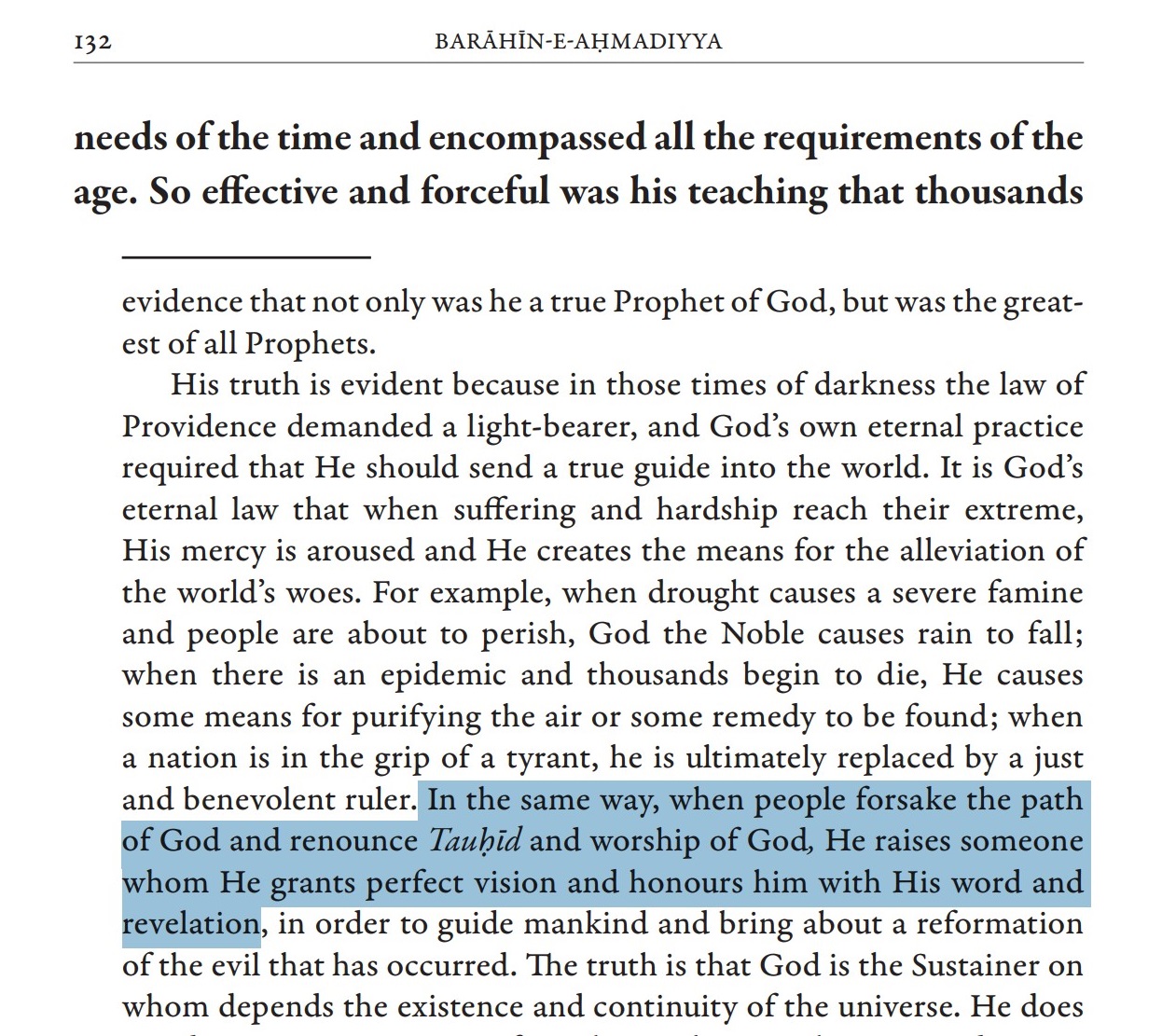
اور وہ وعدہ میری ذات کی نسبت نہیں ہے بلکہ تمہاری نسبت وعدہ ہے جیسا کہ خدا فرماتا ہے کہ میں اس جماعت کو جو تیرے پیرو ہیں قیامت تک دوسروں پر غلبہ دوں گا سوضرور ہے کہ تم پر میری جدائی کا دن آوے تا بعد اس کے وہ دن آوے جو دائمی وعدہ کا دن ہے
And that promise is not regarding my own person, but is a promise regarding you , just as God says that "I will grant dominance until the Day of Resurrection to who follows you". So it is necessary that the day of my separation from you should come, so that after it comes that day which is the day of the permanent promise.
وہ ہمارا خدا وعدوں کا سچا اور وفادار اور صادق خدا ہے وہ سب کچھ تمہیں دکھائے گا جس کا اُس نے وعدہ فرمایا اگر چہ یہ دن دنیا کے آخری دن ہیں اور بہت بلائیں ہیں جن کے نزول کا وقت ہے پر ضرور ہے کہ یہ دنیا قائم رہے جب تک وہ تمام باتیں پوری نہ ہو جائیں جن کی خدا نے خبر دی۔
He is our God, the truthful, faithful, and veracious God of promises. He will show you everything that He has promised, even though these are the final days of the world and there are many calamities whose time of descent has come. But it is necessary that this world remains established until all those things are fulfilled which God has foretold.
میں خدا کی طرف سے ایک قدرت کے رنگ میں ظاہر ہوا اور میں خدا کی ایک مجسم قدرت ہوں
"I have manifested in the form of a Power from God, and I am a personification of God's Power.
اور میرے بعد بعض اور وجود ہوں گے جو دوسری قدرت کا مظہر ہوں گے
And after me, there will be some other beings who will be a manifestation of the second Power.
Commentary: Continuity and personal manifestations of the Second Power
What the text connects The Second Power is called everlasting, with a continuity that will not be cut off (¶30). Allah is said to send it after the author’s death (¶31), and the promise concerns the followers rather than the author’s mortal person (¶33). Most decisively, the author says: “And after me, there will be some other beings who will be a manifestation of the Second Power” (¶¶35–36). These later beings are therefore personal manifestations of the recurring Divine Power.
What “everlasting” most securely means here Paragraphs 30 and 36 read together support continuity across more than one person. On this reading, the silsila is “seasonal” in the spiritual sense: its personal manifestations arise from time to time, in divinely appointed periods of need, while the Divine Power itself remains everlasting until the Last Day. Recurrence through successive persons—not the continuous life or uninterrupted presence of one mortal person—is what makes the chain everlasting.
A specific tiding within a recurring pattern Paragraphs 42–43 contain the specific promised tiding about a person and his recognition. Paragraph 47, by contrast, uses indefinite koi (“someone/anyone”) and states the general rule for communal work while the divinely aided person is absent. Both belong within the recurring personal manifestations of ¶36: the specific tiding identifies the promised fulfilment, and the general rule describes the pattern under which he stands. The person need not first hold a caretaking role.
Recognition “at its time” is explicit in ¶43. Revelation, nearness, the advance of truth and acceptance are explicit in the special tiding of ¶42. This commentary reads those details together with the prayer, caretaking and standing passages as an interpretive sequence: communal preparation; Allah’s selection and spiritual preparation of the servant; nearness, revelation and the Holy Spirit; a tested reforming mission; an identifiable commission expressed through responsible words or unmistakable action; and recognition at the appointed time. No single verbal formula is necessary, but recognizable divine commission is essential.
Use the Moses example within the full sequence In this document Moses is cited because he died before bringing the Israelites to the promised destination and they mourned (¶25). His earlier commission and wider career illuminate Sunnatullah and the tested reforming mission, while the complete sequence is derived from the combined passages rather than from the Moses example alone.
Cross-reference Compare the author’s explicit Barahin-e-Ahmadiyya reference in ¶31, the personal manifestations in ¶¶35–36, communal expectation in ¶¶37–38, and the personal descriptions in ¶¶42–47.
سوتم خدا کی قدرت ثانی کے انتظار میں اکٹھے ہو کر دعا کرتے رہو
Therefore, remain united and keep praying in expectation of God's second manifestation.
اور چاہیے کہ ہر ایک صالحین کی جماعت ہر ایک ملک میں اکٹھے ہو کر دعا میں لگے رہیں تا دوسری قدرت آسمان سے نازل ہو
And it is necessary that every community of the righteous in every country, should remain engaged in prayer altogether until the second Power descends from the heavens.
اور تمہیں دکھاوے کہ تمہارا خدا ایسا قادر خدا ہے۔ اپنی موت کو قریب سمجھو تم نہیں جانتے کہ کس وقت وہ گھڑی آ جائے گی ۔
And He shows you that your God is such a Mighty God. Consider your death near, for you do not know when that hour will come.
اور چاہیے کہ جماعت کے بزرگ جو نفس پاک رکھتے ہیں میرے نام پر میرے بعد لوگوں سے بیعت لیں ☆
And it is necessary that the elders of the community, who possess a pure soul, should take allegiance (Bay'ah) from the people in my name after me. Notes follows now (☆):
Note part 1/3
☆ ایسے لوگوں کا انتخاب مومنوں کے اتفاق رائے پر ہوگا۔ پس جس شخص کی نسبت چالیس مومن اتفاق کریں گے کہ وہ اس بات کے لائق ہے کہ میرے نام پر لوگوں سے بیعت لے وہ بیعت لینے کا مجاز ہوگا اور چاہیے کہ وہ اپنے تئیں دوسروں کے لئے نمونہ بنا دے۔
The selection of such people will be based on the consensus of the believers. Thus, the person concerning whom forty believers agree that he is worthy of taking allegiance (Bay'ah) from the people in my name, that person will be authorized to take the allegiance, and it is necessary that he should make himself a role model for others.
Commentary: Caretakers during absence—not persons abolished at arrival
The express procedure Paragraph 40 uses the plural: pure-souled elders are to receive bai‘at in the author’s name after his death. The footnote then states that a person whom forty believers consider suitable is authorized to perform that task and should make himself an example for others (¶41). Consensus is therefore explicit, as are moral suitability and the defined function of receiving bai‘at.
Why “caretaker” is an accurate functional description Immediately before this procedure, the communities are told to remain united in prayer until the Second Power descends from heaven (¶¶37–39). The authorized elders therefore care for the community under the condition of absence. “Caretaker” describes that function; it is not a separate term quoted from the Urdu.
The people are not given an expiry clause Neither ¶40 nor ¶41 says that the authorized persons are removed, cease to exist as servants, or lose every function when a divinely raised person appears. The “until” in ¶47 qualifies the community’s work under the condition of absence; it does not grammatically cancel the people authorized in the earlier footnote. The appearance ends the absence, not the existence or usefulness of the caretakers. The caretaking function remains present, but it no longer functions as a substitute for an absent manifestation.
Distinct sources establish functional subordination Believers authorize the defined bai‘at-taking task by consensus (¶¶40–41), whereas Allah sends or raises a manifestation and grants the spiritual marks named in the text (¶31; ¶42; ¶47). Human agreement does not create those divine marks. Therefore, once the Second Manifestation is present, any continuing caretaking is expected to be subordinate to it: caretakers may assist, administer and serve, but their derivative authority cannot supersede the divinely raised guide. This hierarchy is a strong inference from the two sources of authority. As a practical inference, if some caretakers refuse, the Second Manifestation does not coerce them. Separation does not elevate their consensus authority to divine authority, and the Second Manifestation proceeds independently with the reforming mission Allah has given him. The categories still need not exclude one another: an authorized caretaker could later be divinely raised, or other caretakers could serve under him, including through administrative and supporting roles.
Allah’s choice is not confined to the caretakers The forty-person consensus in ¶41 authorizes a human task; it does not nominate, produce or restrict the person Allah may raise. One of those caretakers may become the Second Manifestation, but Allah may instead raise another righteous and faithful follower who belongs to the author’s spiritual zurriyyat (¶42). On this interpretation, every such follower lies within the possible field of Allah’s choice; only Allah’s selection and the promised marks make one the Second Manifestation. Thus caretaking is neither a prerequisite nor proof of divine raising.
| Question | Consensus-authorized caretaking | Divinely raised manifestation |
|---|---|---|
| Stated source | Agreement of forty believers. | Allah shows, sends or raises; Allah grants the named spiritual marks. |
| Express function | Receive bai‘at in the author’s name and be a moral example. | Manifest the Second Power; in the specific tiding, advance truth through nearness and revelation; in the general rule, receive the Holy Spirit and stand up. |
| Key texts | ¶¶40–41 | ¶¶30–36, ¶¶42–43, ¶47 |
| Relationship | The functions are distinguishable. A caretaker or another righteous and faithful follower may lie within the possible field of Allah’s choice; only Allah’s selection and the promised marks make one the Second Manifestation. Caretaker status is neither required nor sufficient. Paragraphs 42–43 describe the selected servant specifically, while paragraph 47 states the general rule he fulfils. | |
| After appearance | The condition of absence ends, but the caretakers remain. They should continue subordinately to the Second Manifestation. As a practical inference, those who refuse are not coerced: separation cannot elevate consensus authority to divine authority, and his divinely commissioned mission continues independently. | |
Keep the conclusion within the sentence The passage does not specify the geographic scope, duration or wider authority of each authorized person. Its plural wording permits more than one such person, but it neither requires complete decentralization nor describes a single central structure. Those questions remain outside what ¶¶40–41 expressly say.
Cross-reference Read the absence-phase prayer in ¶¶37–39 with the caretaking task in ¶¶40–41. Then compare the specific tiding in ¶¶42–43 and the general rule in ¶47.
Note part 2/3
خدا نے مجھے خبر دی ہے کہ میں تیری جماعت کے لئے تیری ہی ذریت سے ایک شخص کو قائم کروں گا اور اُس کو اپنے قرب اور وحی سے مخصوص کروں گ اور اس کے ذریعہ سے حق ترقی کرے گا اور بہت سے لوگ سچائی کو قبول کریں گے سو اُن دنوں کے منتظر رہو
God has informed me that for your community, I will appoint a person from your own progeny (zurriyyat), and I will distinguish him with My nearness and revelation (Wahy), and through him, the truth will progress, and many people will accept the truth. So, wait for those days.
Note part 3/3
اور تمہیں یادر ہے کہ ہر ایک کی شناخت اُس کے وقت میں ہوتی ہے اور قبل از وقت ممکن ہے کہ وہ معمولی انسان دکھائی دے یا بعض دھوکہ دینے والے خیالات کی وجہ سے قابل اعتراض ٹھہرے جیسا کہ قبل از وقت ایک کامل انسان بننے والا بھی پیٹ میں صرف ایک نطفہ یا علاقہ ہوتا ہے۔ منہ
And remember that the recognition (true identification) of everyone happens at their (appointed) time, and before the appointed time it is possible that they may appear to be an ordinary human, or be deemed objectionable due to certain deceptive thoughts. Just as a person destined to become a perfect human is only a sperm drop or a clot in the womb before the appointed time. [End of Note]"
Commentary: A specific revelation, its promised person and recognition
The specific promised tiding Paragraph 42 opens with “God has informed me” and reports a promised person whom Allah will raise “for your community” from the author’s zurriyyat. This is not a general procedure for choosing successors. It is the specific revealed tiding introduced in the summary. Four predicates are explicit: Allah raises the person, distinguishes him by nearness and revelation, advances truth through him, and brings many people to accept the truth.
Paragraph 43 applies to that specific tiding Paragraph 43 immediately explains why the promised person may not be recognized early. Its maxim—“everyone is recognized at his appointed time”—is general in wording, but particular in its discourse function here: it interprets the one person just promised in ¶42. The embryo analogy likewise contrasts that person’s unrecognized beginning with later maturity and recognition.
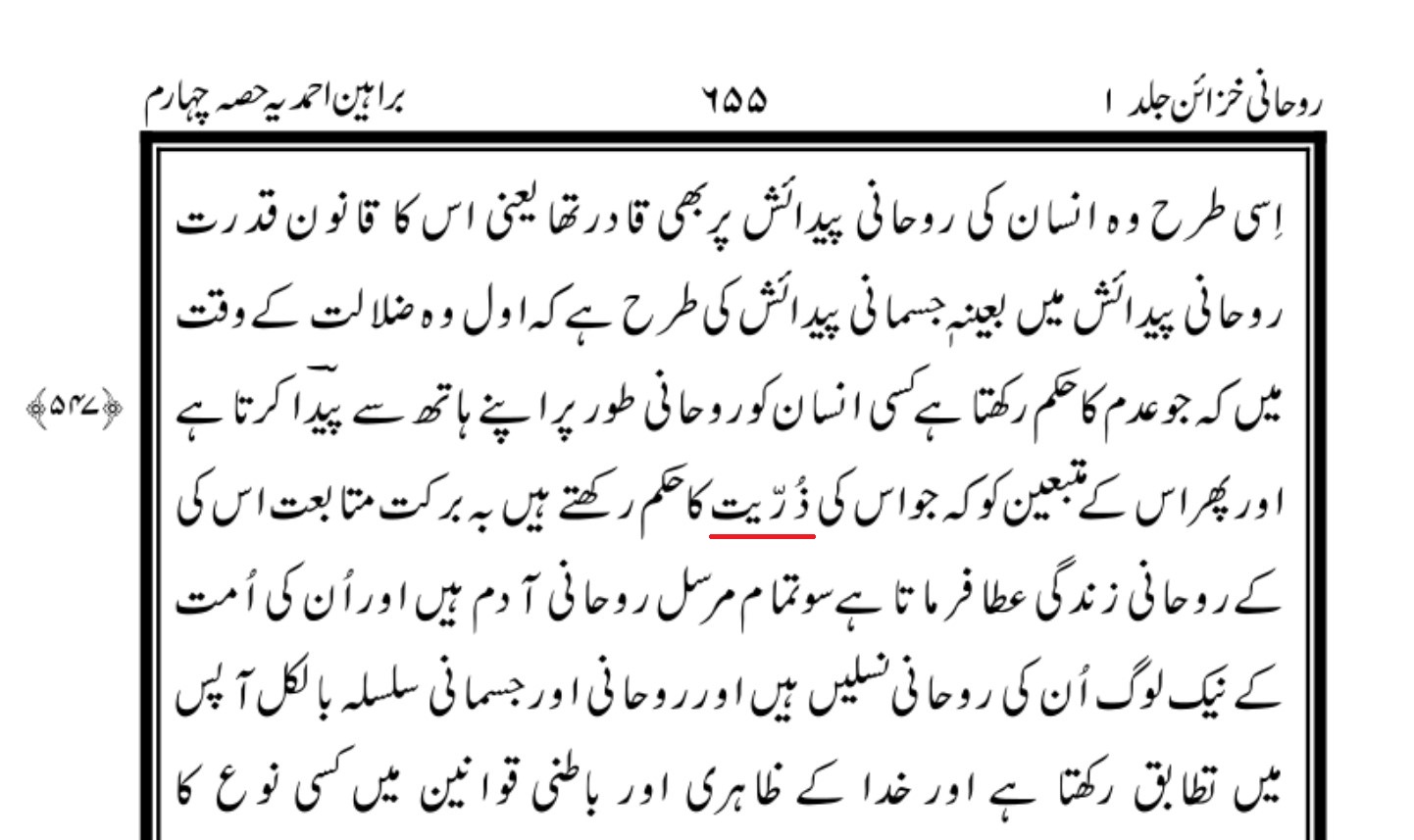
The strongest authorial parallel: spiritual “Adams” and their progeny In Barahin-e-Ahmadiyya, Part IV, Ruhani Khaza’in, vol. 1, p. 655, the author explains spiritual birth and says that Allah grants spiritual life to a guide’s followers, “who are his [spiritual] progeny by virtue of their obedience.” He then states that “all Messengers are spiritual ‘Adams’” and that the pious among their followers are “their spiritual progeny.” The same passage is available in the English translation, Part Four, p. 64.
This passage does more than show that a word can be figurative. It positively defines spiritual parentage: a divinely raised guide gives spiritual life, and obedient, righteous followers stand to him as spiritual progeny stand to a spiritual Adam. It is therefore a close authorial parallel to a promise concerning religious zurriyyat.
Authorial lexical cross-reference: Barahin-e-Ahmadiyya IV, p. 683
A second authorial usage confirms the semantic range In Haqiqat-ul-Wahi, Ruhani Khaza’in, vol. 22, p. 119, the author writes ذریت شیطان, zurriyyat-e-Shaitan (“progeny of Satan”), for a moral or spiritual relationship rather than physical descent. This is direct evidence from the author’s own usage—not merely a dictionary possibility—and establishes that zurriyyat can be spiritual in his idiolect.
Authorial lexical cross-reference: Haqiqat-ul-Wahi, p. 119
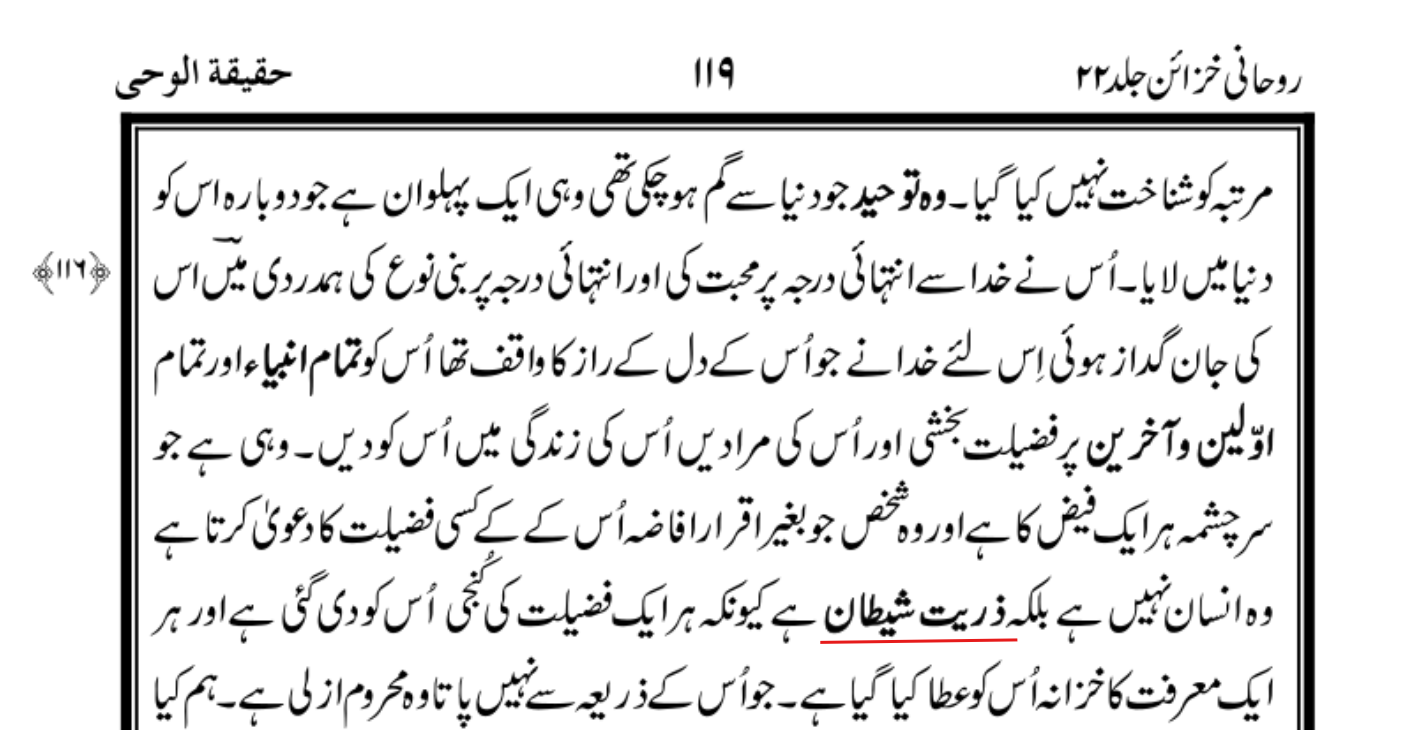
Application to paragraph 42 Together, these are direct authorial evidence—not merely dictionary possibilities—for spiritual zurriyyat. The Barahin-e-Ahmadiyya passage is especially probative because it defines the relationship through obedience, spiritual birth and righteous following. This strongly grounds a spiritual-lineage reading of ¶42, whose promised marks are likewise religious: nearness, revelation and the advance of truth. It does not prove that biological descent is excluded; the sentence may still bear a biological or combined meaning. What it cannot support is genealogy as a sufficient criterion, because the sentence itself requires the four divine and religious predicates.
Who may be raised The promise therefore does not confine the divine choice to a biological son or to a consensus-authorized caretaker. On this interpretation, every righteous and faithful follower of Hazrat Mirza Ghulam Ahmad’s (as) teachings lies within the possible field of Allah’s choice. This includes a caretaker and any other such follower, but only Allah’s selection and the marks in ¶42 make one the Second Manifestation; neither nominal membership nor consensus can bind His choice.
Recognition is not reverse proof Paragraph 43 says that the person may look ordinary or be judged objectionable before the appointed time. That explains delayed recognition; it does not make ordinariness or objection proof of fulfilment. The positive predicates in ¶42 remain controlling. His divine commission must also become identifiable through a responsible verbal claim or unmistakable action; otherwise the Second Manifestation could not be recognized as such. The claim is essential but not sufficient without revelation, nearness, character, sustained divine support and beneficial spiritual fruit. The grammar does not clearly identify whose “deceptive thoughts” are meant, so that phrase should not be assigned more precisely than the sentence permits.
Office is optional; reform is primary Allah may later grant the selected servant a public office or worldly rank, but that position neither creates nor defines the Second Manifestation. His primary commission remains the correction of communal failures, the restoration of tawhid, and the spiritual renewal of the community.
The wider text nevertheless supplies a boundary: revelation after the Holy Prophet remains dependent on faithful following of him and cannot introduce a new law (¶¶88–96). Thus any spiritual reading of zurriyyat must mean continuity within that religious chain, not an independent source of revelation.
Cross-reference Compare the recurring manifestations in ¶¶30–36, the specific tiding and recognition in ¶¶42–43, the general rule in ¶47, and dependent revelation in ¶¶88–96.
خدا تعالیٰ چاہتا ہے کہ اُن تمام روحوں کو جو زمین کی متفرق آبادیوں میں آباد ہیں کیا یورپ اور کیا ایشیاء اُن سب کو جو نیک فطرت رکھتے ہیں توحید کی طرف کھینچے
God Almighty desires that all those souls who are settled in the various habitations of the earth, whether in Europe or in Asia, He desires that all of them, who possess a good nature should be drawn towards the Oneness of God (Tawhid).
اور اپنے بندوں کو دین واحد پر جمع کرے یہی خدا تعالیٰ کا مقصد ہے جس کے لئے میں دنیا میں بھیجا گیا
And that He may gather His servants upon the one religion—this is the very purpose of God Almighty for which I have been sent into the world.
سو تم اس مقصد کی پیروی کرو مگر نرمی اور اخلاق اور دعاؤں پر زور دینے سے
So you should follow this purpose, but with gentleness, good character, and with an emphasis on prayer.
اور جب تک کوئی خدا سے روح القدس پا کر کھڑا نہ ہو سب میرے بعد مل کر کام کرو ۔
And until someone, having received the Holy Spirit (Ruh-ul-Qudus) from God, stands up, all of you should work together after me.
Commentary: Paragraph 47 states a general rule for an absence
The indefinite grammar Paragraph 47 says koi—“someone” or “anyone”—and therefore states a general category: all are to work together after the author’s death until someone receives the Holy Spirit from Allah and stands up. The specific promise in ¶¶42–43 identifies the person who fulfils this general rule. He need not first be a caretaker: Allah may raise a caretaker or another righteous and faithful follower.
Why this is a general rule The immediate application is the period after the author’s death. Its indefinite form, however, sits within an everlasting silsila (¶30) in which “some other beings” are personal manifestations of the Second Power from time to time (¶36). On this reading, these are divinely appointed spiritual seasons: the Power remains everlasting while its personal manifestations recur. Read together, these passages support a repeatable principle: during an absence, the community works together; when Allah spiritually equips someone to stand up, the condition of absence changes. The selected Second Manifestation must belong to the author’s spiritual zurriyyat through righteous and faithful following and must bear the divine marks in ¶42. Every such follower lies within the possible field of Allah’s choice, but only Allah’s selection and those marks make one the Second Manifestation.
The specific tiding fulfils the general rule The special revelation of ¶¶42–43 supplies the promised person, his nearness, revelation, religious fruit and appointed recognition. The general rule in ¶47 supplies the repeatable communal instruction under which that person stands. The two passages have different scope—specific tiding and general rule—but form one coherent sequence.
The standing motif “Stands up” describes an outward emergence, not merely an inward experience. It echoes Allah making Abu Bakr stand up in the earlier crisis (¶23). The parallel supports timely, recognizable action through a person, but it does not make the two figures identical in rank or function.
“Until” ends the absence-condition, not the caretakers The sentence marks a change when someone stands up, but it does not describe the complete arrangement afterward. In particular, it does not say that the elders authorized in ¶¶40–41 are eliminated or become useless. Their caretaking responds to the absence; the arrival changes that condition. Continued cooperation and service are fully compatible with the sentence, and the caretakers should then subordinate their service to the person divinely raised to stand up. As a practical inference, if some refuse, he does not coerce them: separation does not elevate their consensus authority to divine authority, and his divinely commissioned mission continues independently.
The next sentence tells all believers to partake of the Holy Spirit through compassion and purification (¶48). “Holy Spirit” by itself is therefore not an exclusive identifier. The distinctive description in ¶47 is the whole combination: someone receives it from Allah and stands up in relation to the community’s shared work. This outward emergence makes the divine commission recognizable. A responsible verbal claim or unmistakable action is essential, though no single verbal formula is required; the claim must be confirmed by the complete sequence of revelation, nearness, testing, sustained divine support and beneficial reforming fruit.
Cross-reference Read the general rule in ¶47 with the recurring chain in ¶¶30–36, the caretaking instructions in ¶¶37–41, the distinct specific tiding in ¶¶42–43, Abu Bakr’s standing in ¶23, and general participation in the Holy Spirit in ¶48.
Purification, compassion, sacrifice and trust in Allah
اور چاہئیے کہ تم بھی ہمدردی اور اپنے نفسوں کے پاک کرنے سے روح القدس سے حصہ لو کہ بجز روح القدس کے حقیقی تقویٰ حاصل نہیں ہو سکتی
And it is necessary that you also take a share of the Holy Spirit "Rūh-ul-Qudus" through sympathy "hamdardī" and the purification of your souls "nafsōñ kē pāk karnē sē". For, without the Holy Spirit, true righteousness "Taqwā" cannot be attained.
اور نفسانی جذبات کو بکلی چھوڑ کر خدا کی رضا کے لئے وہ راہ اختیار کرو جو اُس سے زیادہ کوئی راہ تنگ نہ ہو ۔
And totally abandon passions of ego "nafsānī jazbāt" and adopt the path for the sake of God's pleasure "Razā" which is more difficult/restrictive than any other path.
دنیا کی لذتوں پر فریفتہ مت ہو کہ وہ خدا سے جدا کرتی ہیں
Do not be infatuated with the pleasures of the world "duniyā kī lazzatōñ" for they separate you from God "khudā sē judā kartī haiñ".
اور خدا کے لئے تلخی کی زندگی اختیار کرو
And for the sake of God, adopt a life of bitterness,
درد جس سے خدا راضی ہو اُس لذت سے بہتر ہے جس سے خدا ناراض ہو جائے ۔
The pain "dard" with which God is pleased is better than the pleasure "lazzat" with which God becomes displeased.
اور وہ شکست جس سے خدا راضی ہو اس فتح سے بہتر ہے جو موجب غضب الہی ہو ۔
And the defeat "shikast" with which God is pleased is better than the victory "fatah" which becomes the cause of Divine wrath "Ghaḍab-e-Ilāhī".
اس محبت کو چھوڑ دو جو خدا کے غضب کے قریب کرے۔
Abandon the love that brings one close to the wrath/anger of God.
اگر تم صاف دل ہو کر اُس کی طرف آجاؤ تو ہر ایک راہ میں وہ تمہاری مدد کرے گا اور کوئی دشمن تمہیں نقصان نہیں پہنچا سکے گا ۔
If you come to Him with a pure heart, He will help you in every path, and no enemy will be able to harm you.
خدا کی رضا کو تم کسی طرح پا ہی نہیں سکتے جب تک تم اپنی رضا چھوڑ کر اپنی لذات چھوڑ کر اپنی عزت چھوڑ کر اپنا مال چھوڑ کر اپنی جان چھوڑ کر اُس کی راہ میں وہ تلخی نہ اُٹھاؤ جو موت کا نظارہ تمہارے سامنے پیش کرتی ہے
You absolutely cannot attain the pleasure/will of God unless you abandon your own desires, abandon your own pleasures, abandon your own honor, abandon your own wealth, and abandon your own life, and endure the bitterness in His path that the sight of death presents before you.
لیکن اگر تم تلخی اُٹھا لو گے تو ایک پیارے بچے کی طرح خدا کی گود میں آ جاؤ گے اور تم اُن راستبازوں کے وارث کئے جاؤ گے جو تم سے پہلے گزر چکے ہیں اور ہر ایک نعمت کے دروازے تم پر کھولے جائیں گے لیکن تھوڑے ہیں جو ایسے ہیں ۔
But if you endure the bitterness, you will come into the lap of God like a beloved child, and you will be made the heirs of those righteous ones who have passed away before you, and the doors of every blessing will be opened for you, but few are those who are like this.
خدا نے مجھے مخاطب کر کے فرمایا کہ تقویٰ ایک ایسا درخت ہے جس کو دل میں لگانا چاہیے ۔
God addressed me and said that piety (taqwā) is like a tree which ought to be planted in the heart.
وہی پانی جس سے تقویٰ پرورش پاتی ہے تمام باغ کو سیراب کر دیتا ہے۔ تقویٰ ایک ایسی جڑھ ہے کہ اگر وہ نہیں تو سب کچھ ہیچ ہے اور اگر وہ باقی رہے تو سب کچھ باقی ہے۔
The very water(Tawakkul) by which piety (taqwā) is nourished irrigates the entire garden(whole life). Piety(Taqwa) is such a root that if it is absent, everything is worthless, but if it remains, everything remains.
Commentary: Holy Spirit, purification and sacrifice
What the text says Paragraphs 48–59 explain how believers may partake of the Holy Spirit: through compassion, purification of the self, sacrifice, taqwa and tawakkul. The instruction is general rather than limited to the “someone” in ¶47.
The image of taqwa as a tree is especially useful. A tree is not produced by words alone. It needs a root, water and patient growth. In the same way, the text makes God-consciousness visible through repeated moral choices rather than through terminology alone (¶¶58–59).
Why this matters to the earlier promise Because all followers are told to seek a share of the Holy Spirit, that phrase alone cannot identify the person promised in the specific tiding. The fuller descriptions must be read together: the specific promise identifies the person and gives nearness, revelation and religious fruit (¶¶42–43), while the general rule describes that divinely prepared servant receiving the Holy Spirit and standing up (¶47). On this interpretation, recognition depends on the complete pattern, including an identifiable commission through responsible words or unmistakable action, not on the phrase “Holy Spirit” by itself.
A balanced application Sacrifice for Allah does not mean deliberately harming oneself, neglecting family responsibilities or refusing lawful means. The target named by the passage is the selfish ego and attachment that displaces God, not responsible life. The moral sequence continues in ¶¶60–76.
Cross-reference Compare the individual who stands up under the general rule in ¶47 with the general “you also” in ¶48 and the separate specific tiding in ¶42.
انسان کو اس فضولی سے کیا فائدہ جو زبان سے خدا طلبی کا دعویٰ کرتا ہے لیکن قدم صدق نہیں رکھتا۔
What benefit is there for a person from that worthlessness who claims to seek God with their tongue, but does not possess the foot of truthfulness (or sincerity in their actions)?
دیکھو میں تمہیں سچ سچ کہتا ہوں کہ وہ آدمی ہلاک شدہ ہے جو دین کے ساتھ کچھ دنیا کی ملونی رکھتا ہے
Behold! I truly say to you that the person who mixes some worldly matter with religion is ruined (or destroyed).
اور اُس نفس سے جہنم بہت قریب ہے جس کے تمام ارادے خدا کے لئے نہیں ہیں بلکہ کچھ خدا کے لئے اور کچھ دنیا کے لئے ۔ پس اگر تم دنیا کی ایک ذرہ بھی ملونی اپنے اغراض میں رکھتے ہو تو تمہاری تمام عبادتیں عبث ہیں ۔ اس صورت میں تم خدا کی پیروی نہیں کرتے بلکہ شیطان کی پیروی کرتے ہو ۔
And Hell is very near to that soul whose intentions are not entirely for God, but are partly for God and partly for the world." "Therefore, if you keep even a particle of the world mixed in with your objectives (aims/purposes), then all your acts of worship are futile (or vain)." "In that state, you do not follow God; rather, you follow Satan.
تم ہرگز توقع نہ کرو کہ ایسی حالت میں خدا تمہاری مدد کرے گا بلکہ تم اس حالت میں زمین کے کیڑے ہو اور تھوڑے ہی دنوں تک تم اس طرح ہلاک ہو جاؤ گے جس طرح کہ کیڑے ہلاک ہوتے ہیں اور تم میں خدا نہیں ہوگا …
Never expect that in such a state God will help you. Rather, in this condition you are like the worms of the earth, and within a few days you will perish in the same way that worms perish, and God will not be within you.
بلکہ تمہیں ہلاک کر کے خدا خوش ہوگا
Rather, God will be pleased by destroying you.
لیکن اگر تم اپنے نفس سے در حقیقت مر جاؤ گے تب تم خدا میں ظاہر ہو جاؤ گے اور خدا تمہارے ساتھ ہوگا
But if you truly die from your ego, then you will appear in God, and God will be with you.
اور وہ گھر بابرکت ہوگا جس میں تم رہتے ہو گے اور اُن دیواروں پر خدا کی رحمت نازل ہوگی جو تمہارے گھر کی دیوار میں ہیں۔
And that house will be blessed in which you will live, and upon those walls God’s mercy will descend which are the walls of your house.
اور وہ شہر بابرکت ہوگا جہاں ایسا آدمی رہتا ہوگا ۔
And the city in which such a person lives will be blessed.
اگر تمہاری زندگی اور تمہاری موت اور تمہاری ہر ایک حرکت اور تمہاری نرمی اور گرمی محض خدا کے لئے ہو جائے گی اور ہر ایک تلخی اور مصیبت کے وقت تم خدا کا امتحان نہیں کرو گے اور تعلق کو نہیں توڑو گے بلکہ آگے قدم بڑھاؤ گے تو میں سچ سچ کہتا ہوں کہ تم خدا کی ایک خاص قوم ہو جاؤ گے۔
If your life and your death, and your every action, and your gentleness and firmness, become purely for God; and if, at every time of bitterness and hardship, you do not put God to the test and do not break the bond, but instead step forward—then I truly say to you that you will become a special people of God.
تم بھی انسان ہو جیسا کہ میں انسان ہوں اور وہی میرا خدا تمہارا خدا ہے۔
You too are a human being, just as I am a human being, and the same God who is my God is your God.
پس اپنی پاک قوتوں کو ضائع مت کرو۔ اگر تم پورے طور پر خدا کی طرف جھکو گے تو دیکھو میں خدا کی منشاء کے موافق تمہیں کہتا ہوں کہ تم خدا کی ایک قوم برگزیدہ ہو جاؤ گے خدا کی عظمت اپنے دلوں میں بٹھا ؤ اور اُس کی توحید کا اقرار نہ صرف زبان سے بلکہ عملی طور پر کرو تا خدا بھی عملی طور پر اپنا لطف و احسان تم پر ظاہر کرے ۔
So do not waste your good efforts/powers. If you incline yourselves wholly toward God, then behold, I say to you in accordance with God’s will that you will become a chosen people of God. Establish the greatness of God in your hearts, and affirm His oneness not only with the tongue but also in practice, so that God may also manifest His grace and favor upon you in practice.
کینہ وری سے پر ہیز کرو اور بنی نوع سے سچی ہمدردی کے ساتھ پیش آؤ ۔ ہر ایک راہ نیکی کی اختیار کرو نہ معلوم کس راہ سے تم قبول کئے جاؤ۔
Refrain from malice, and deal with humankind with sincere compassion. Adopt every path of goodness, for you do not know by which path you will be accepted.
تمہیں خوشخبری ہو کہ قرب پانے کا میدان خالی ہے۔ ہر ایک قوم دنیا سے پیار کر رہی ہے اور وہ بات جس سے خدا راضی ہو اُس کی طرف دنیا کو توجہ نہیں وہ لوگ جو پورے زور سے اس دروازہ میں داخل ہونا چاہتے ہیں اُن کے لئے موقع ہے کہ اپنے جو ہر دکھلائیں اور خدا سے خاص انعام پاویں یہ مت خیال کرو کہ خدا تمہیں ضائع کر دے گا تم خدا کے ہاتھ کا ایک بیج ہو جو زمین میں بویا گیا خدا فرماتا ہے کہ یہ بیج بڑھے گا اور پھولے گا اور ہر ایک طرف سے اس کی شاخیں نکلیں گی اور ایک بڑا درخت ہو جائے گا پس مبارک وہ جو خدا کی بات پر ایمان رکھے اور درمیان میں آنے والے ابتلاؤں سے نہ ڈرے کیونکہ ابتلاؤں کا آنا بھی ضروری ہے تا خدا تمہاری آزمائش کرے کہ کون اپنے دعوی بیعت میں صادق اور کون کا ذب ہے۔
Glad tidings to you, for the field of attaining nearness is empty. Every nation is in love with the world, and the world does not turn its attention toward that which pleases God. For those who desire with full strength to enter this door, there is an opportunity to show their true worth and to receive a special reward from God. Do not think that God will waste you; you are a seed in the hand of God that has been sown in the earth. God says that this seed will grow and flourish, and branches will spread out from it in every direction, and it will become a great tree. So blessed is the one who believes in the word of God and does not fear the trials that come in between, for the coming of trials is also necessary so that God may test you to see who is truthful in his claim of allegiance and who is false.
وہ جو کسی ابتلا سے لغزش کھائے گا وہ کچھ بھی خدا کا نقصان نہیں کرے گا اور بد بختی اُس کو جہنم تک پہنچائے گی اگر وہ پیدا نہ ہوتا تو اُس کے لئے اچھا تھا۔
Whoever stumbles because of a trial will cause no loss to God at all, and his misfortune will lead him to Hell. It would have been better for him had he not been born.
مگر وہ سب لوگ جو اخیر تک صبر کریں گے اور اُن پر مصائب کے زلزلے آئیں گے اور حوادث کی آندھیاں چلیں گی اور قو میں جنسی اور ٹھٹھا کریں گی اور دنیا اُن سے سخت کراہت کے ساتھ پیش آئے گی وہ آخر فتح یاب ہوں گے اور برکتوں کے دروازے اُن پر کھولے جائیں گے ۔
But all those who remain patient until the end—upon whom the earthquakes of hardships will come, and the storms of calamities will blow, and nations will mock and ridicule them, and the world will treat them with intense aversion—will ultimately be victorious, and the doors of blessings will be opened for them.
خدا نے مجھے مخاطب کر کے فرمایا کہ میں اپنی جماعت کو اطلاع دوں کہ جولوگ ایمان لائے ایسا ایمان جو اُس کے ساتھ دنیا کی ملونی نہیں اور وہ ایمان نفاق یا بز دلی سے آلودہ نہیں اور وہ ایمان اطاعت کے کسی درجہ سے محروم نہیں ایسے لوگ خدا کے پسندیدہ لوگ ہیں اور خدا فرماتا ہے کہ وہی ہیں جن کا قدم صدق کا قدم ہے۔
God addressed me and said that I should inform my community that those who believe with such faith that is not mixed with the love of the world, and whose faith is not tainted with hypocrisy or cowardice, and whose faith is not lacking in any degree of obedience—such people are God’s favored ones. And God says that these are the ones whose step is a step of truthfulness.
اے سننے والوسنو !! کہ خدا تم سے کیا چاہتا ہے بس یہی کہ تم اُسی کے ہو جاؤ اُس کے ساتھ کسی کو بھی شریک نہ کرو نہ آسمان میں نہ زمین میں ۔
O listeners, listen! What God desires from you is only this: that you become wholly His, and that you associate no one with Him—neither in heaven nor on earth.
Commentary: Truthfulness, trials and true devotion
What the text says Paragraphs 60–76 attack the gap between religious words and conduct. The author condemns a claim to seek Allah that lacks the “foot of truthfulness” (¶60), warns against mixed motives, and calls believers to die to the selfish ego.
This death of the ego is moral, not physical. It means that a person no longer treats personal advantage as the highest law. The resulting believer is described as a blessing to the home and city; moral and spiritual claims are therefore tested by their practical effect on others.
The passages also prepare followers for opposition and trials. Hardship can expose whether faith depends upon success. Sincere steadfastness is not equated with freedom from difficulty.
The standard applies to everyone These qualities are necessary for the whole community and cannot, by themselves, identify the promised person. The more specific predicates remain those in ¶42. Conversely, claimed revelation or religious success cannot be detached from the truthfulness, compassion and self-purification required of all believers.
Cross-reference Read the moral standard in ¶¶48–76 alongside the promised person’s specific qualities in ¶42 and the author’s earlier appeal to signs in ¶¶6–10.
Allah, the Qur’an, Prophet Muhammad (saw) and prophethood
ہمارا خدا وہ خدا ہے جواب بھی زندہ ہے جیسا کہ پہلے زندہ تھا اور اب بھی وہ بولتا ہے جیسا کہ وہ پہلے بولتا تھا اور اب بھی وہ سنتا ہے جیسا کہ پہلے سنتا تھا۔ یہ خیال خام ہے کہ اس زمانہ میں وہ سننا تو ہے مگر بولتا نہیں بلکہ وہ سنتا ہے اور بولتا بھی ہے ، اس کی تمام صفات ازلی ابدی ہیں کوئی صفت بھی معطل نہیں اور نہ کبھی ہوگی۔
Our God is that God who is alive today just as He was alive before, and He still speaks just as He spoke before, and He still hears just as He heard before. It is a false notion that in this age He hears but does not speak; rather, He hears and He speaks as well. All His attributes are eternal and everlasting—no attribute is suspended, nor will any ever be.
وہ وہی واحد لاشریک ہے جس کا کوئی بیٹا نہیں اور جس کی کوئی بیوی نہیں وہ وہی بے مثل ہے جس کا کوئی ثانی نہیں اور جس کی طرح کوئی فرد کسی خاص صفت سے مخصوص نہیں اور جس کا کوئی ہمتا نہیں جس کا کوئی ہم صفات نہیں
He is the One, without any partner, Who has no son and no wife. He is the Incomparable, Who has no equal, and like Whom no being is distinguished by any specific attribute. He has no match, and there is absolutely none who shares His attributes.
اور جس کی کوئی طاقت کم نہیں وہ قریب ہے باوجود دور ہونے کے۔ اور دور ہے باوجود نزدیک ہونے کے ۔
And His power never diminishes; He is near despite being distant, and distant despite being near.
وہ تمثل کے طور پر اہل کشف پر اپنے تئیں ظاہر کر سکتا ہے مگر اُس کے لئے نہ کوئی جسم ہے اور نہ کوئی شکل ہے اور وہ سب سے اوپر ہے مگر نہیں کہہ سکتے کہ اُس کے نیچے کوئی اور بھی ہے۔
He can manifest Himself symbolically to the people of spiritual unveiling (ahl-e-kashf), yet He has neither a body nor a form. And He is above all, but it cannot be said that there is anything beneath Him.
اور وہ عرش پر ہے مگر نہیں کہہ سکتے کہ زمین پر نہیں۔ وہ مجمع ہے تمام صفات کا ملہ کا اور مظہر ہے تمام محامد حقہ کا اور سر چشمہ ہے تمام خوبیوں کا ۔
And He is upon the Throne, yet it cannot be said that He is not on the earth. He is the gathering of all attributes of perfection, the manifestation of all true praises, and the fountainhead of all goodness.
اور جامع ہے تمام طاقتوں کا ۔ اور مبدء ہے تمام فیضوں کا۔ اور مرجع ہے ہر ایک شے کا۔ اور مالک ہے ہر ایک ملک کا۔ اور متصف ہے ہر ایک کمال سے۔ اور منزہ ہے ہر ایک عیب اور ضعف سے۔
And He is the possessor of all powers, the source of all grace, the return of every thing, the owner of every dominion, endowed with every perfection, and free from every defect and weakness.
اور مخصوص ہے اس امر میں کہ زمین والے اور آسمان والے اُسی کی عبادت کریں اور اُس کے آگے کوئی بات بھی آن ہونی نہیں اور تمام روح اور اُن کی طاقتیں اور تمام ذرات اور اُن کی طاقتیں اُسی کی پیدائش ہیں۔
And He alone is distinguished in this matter: that the inhabitants of the earth and the inhabitants of the heavens worship Him alone. Nothing is impossible for Him, and all souls and their powers, and all particles and their powers, are His creation.
اُس کے بغیر کوئی چیز ظاہر نہیں ہوتی ۔ وہ اپنی طاقتوں اور اپنی قدرتوں اور اپنے نشانوں سے اپنے تئیں آپ ظاہر کرتا ہے اور اُس کو اسی کے ذریعہ سے ہم پاسکتے ہیں اور وہ راستبازوں پر ہمیشہ اپنا وجود ظاہر کرتا رہتا ہے اور اپنی قدرتیں اُن کو دکھلاتا ہے اسی سے وہ شناخت کیا جاتا اور اسی سے اُس کی پسندیدہ راہ شناخت کی جاتی ہے۔
Nothing comes into manifestation without Him. He reveals Himself through His powers, His might, and His signs, and through these alone we are able to recognize Him. He continually manifests His existence to the righteous and shows them His powers; through this He is recognized, and through this His favored path is made known.
وہ دیکھتا ہے بغیر جسمانی آنکھوں کے ۔ اور سنتا ہے بغیر جسمانی کانوں کے۔ اور بولتا ہے بغیر جسمانی زبان کے۔ اسی طرح نیستی سے ہستی کرنا اُس کا کام ہے جیسا کہ تم دیکھتے ہو کہ خواب کے نظارہ میں بغیر کسی مادہ کے ایک عالم پیدا کر دیتا ہے اور ہر ایک فانی اور معدوم کو موجود دکھلا دیتا ہے پس اسی طرح اس کی تمام قدرتیں ہیں۔ نادان ہے وہ جو اُس کی قدرتوں سے انکار کرے۔
He sees without physical eyes, and He hears without physical ears, and He speaks without a physical tongue. Likewise, bringing existence out of non-existence is His work. Just as you see that in a dream He creates a whole world without any material substance and makes every perishable and nonexistent thing appear present—so are all His powers. Ignorant is the one who denies His powers.
اندھا ہے وہ جو اُس کی عمیق طاقتوں سے بے خبر ہے ۔ وہ سب کچھ کرتا ہے اور کر سکتا ہے بغیر اُن امور کے جو اُس کی شان کے مخالف ہیں یا اُس کے مواعید کے برخلاف ہیں۔
Blind is the one who is unaware of His profound powers. He does everything and can do everything—except those matters that are contrary to His majesty or against His promises.
اور وہ واحد ہے اپنی ذات میں اور صفات میں اور افعال میں اور قدرتوں میں ۔ اور اُس تک پہنچنے کے لئے تمام دروازے بند ہیں مگر ایک دروازہ جو فرقان مجید نے کھولا ہے اور تمام نبوتیں اور تمام کتا ہیں جو پہلے گذر چکیں اُن کی الگ طور پر پیروی کی حاجت نہیں رہی کیونکہ نبوت محمد یہ اُن سب مشتمل اور حاوی ہے ۔
And He is One—unique in His essence, in His attributes, in His actions, and in His powers. And all doors to reaching Him are closed except the one door that the Noble Qur’an has opened. There is no longer any need to follow separately all the prophecies and all the books that came before, for the Prophethood of Muhammad encompasses and contains them all.
Commentary: Tawakkul and the living God
What these paragraphs teach Paragraphs 77–87 describe Allah as living, speaking, unique, sovereign and free from the limitations of created beings. All created powers depend upon Him, while He depends upon nothing.
This teaching leads to tawakkul, complete trust in Allah. Tawakkul does not require abandoning created means. The text itself says that Allah “creates such means” to complete the unfinished work (¶14). The theological point is dependence: the means act within Allah’s power, not independently of it.
Connection with the central argument The same divine agency runs through the passage: Allah creates the means (¶14), steadies the community (¶¶18–19), raises Abu Bakr (¶23) and sends the Second Power (¶31). Paragraphs 77–87 support that attribution to Allah, but they do not themselves specify the human arrangement through which every future instance occurs.
Cross-reference Compare Allah’s general sovereignty in ¶¶77–87 with the repeated divine verbs in ¶14, ¶18, ¶23 and ¶31.
اور بجز اس کے سب راہیں بند ہیں ۔ تمام سچائیاں جو خدا تک پہنچاتی ہیں اسی کے اندر ہیں نہ اس کے بعد کوئی نئی سچائی آئے گی اور نہ اس سے پہلے کوئی ایسی سچائی تھی جو اس میں موجود نہیں اس لئے اس نبوت پر تمام نبوتوں کا خاتمہ ہے
And apart from this, all other paths are closed. All truths that lead to God are contained within it. No new truth will come after it, nor was there any truth before it that is not already present within it. Therefore, with this Prophethood, all prophethoods have come to an end.
اور ہونا چاہیے تھا کیونکہ جس چیز کے لئے ایک آغاز ہے اس کے لئے ایک انجام بھی ہے لیکن یہ نبوت محمد یہ اپنی ذاتی فیض رسانی سے قاصر نہیں بلکہ سب نبوتوں سے زیادہ اس میں فیض ہے اس نبوت کی پیروی خدا تک بہت سہل طریق سے پہنچا دیتی ہے
And it was necessary that it be so, for whatever has a beginning must also have an end. However, this Muhammadan Prophethood is not deficient in its own capacity to bestow grace; rather, it contains more grace than all other prophethoods. Following this Prophethood leads one to God by a very easy path.
اور اس کی پیروی سے خدا تعالیٰ کی محبت اور اُس کے مکالمہ مخاطبہ کا اُس سے بڑھ کر انعام مل سکتا ہے جو پہلے ملتا تھا مگر اس کا کامل پیر وصرف نبی نہیں کہلا سکتا کیونکہ نبوت کا ملہ تا مہ محمد یہ کی اس میں ہتک ہے ہاں اُمتی اور نبی دونوں لفظ اجتماعی حالت میں اُس پر صادق آ سکتے ہیں کیونکہ اس میں نبوت تامہ کا ملہ محمدیہ کی بہتک نہیں بلکہ اُس نبوت کی چمک اس فیضان سے زیادہ تر ظاہر ہوتی ہے *
And by following him, one may receive the blessing of God Almighty’s love and His converse and communion to a greater extent than was granted before. However, such a perfect follower cannot be called a Prophet independently, for that would be a violation of the finality of the complete Muhammadan Prophethood. Yes, the words ‘ummati’ (follower) and ‘prophet’ may both apply to him collectively, because this does not infringe upon the final and perfect Muhammadan Prophethood; rather, through this grace, the radiance of that Prophethood shines forth even more brightly.
Author’s note
☆باوجود اس کے یہ خوب یا درکھنا چاہیے کہ نبوت تشریعی کا دروازہ بعد آنحضرت صلی اللہ علیہ وسلم کے بالکل مسدود ہے اور قرآن مجید کے بعد اور کوئی کتاب نہیں جو نئے احکام سکھائے یا قرآن شریف کا حکم منسوخ کرے یا اس کی پیروی معطل کرے بلکہ اس کا عمل قیامت تک ہے۔ منه
Despite this, it must be clearly remembered that the door of law-bearing (legislative) prophethood is completely closed after the Holy Prophet (peace and blessings of Allah be upon him). And after the Noble Qur’an, there is no other book that may teach new commandments, or abrogate the command of the Qur’an, or suspend its authority. Rather, its practice and authority remain until the Day of Judgment.
اور جب کہ وہ مکالمہ مخاطبہ اپنی کیفیت اور کمیت کی رو سے کمال درجہ تک پہنچ جائے اور اس میں کوئی کثافت اور کمی باقی نہ ہو ۔ اور کھلے طور پر امور غیبیہ پر ہو تو وہی دوسرے لفظوں میں نبوت کے نام سے موسوم ہوتا ہے جس پر تمام نبیوں کا اتفاق ہے
And when that divine converse and communion, in terms of its quality and quantity, reaches the highest degree of perfection—so that no impurity or deficiency remains in it—and when it openly pertains to matters of the unseen, then it is called by another name, namely Prophethood, upon which all prophets are agreed.
پس یہ ممکن نہ تھا کہ وہ قوم جس کے لئے فرمایا گیا کہ
کُنۡتُمۡ خَیۡرَ اُمَّۃٍ اُخۡرِجَتۡ لِلنَّاسِ 3:111
اور جن کے لئے یہ دعا سکھائی گئی کہ
اِہۡدِنَا الصِّرَاطَ الۡمُسۡتَقِیۡمَ - 1:5 - صِرَاطَ الَّذِیۡنَ اَنۡعَمۡتَ عَلَیۡہِمۡ 1:6
اُن کے تمام افراد اس مرتبہ عالیہ سے محروم رہتے اور کوئی ایک فرد بھی اس مرتبہ کو نہ پاتا اور ایسی صورت میں صرف یہی خرابی نہیں تھی کہ امت محمدیہ ناقص اور نا تمام رہتی اور سب کے سب اندھوں کی طرح رہتے بلکہ یہ بھی نقص تھا کہ آنحضرت صلی اللہ علیہ وسلم کی قوت فیضان پر داغ لگتا تھا اور آپ کی قوت قدسیہ ناقص ٹھہر تی تھی ۔
Therefore, it was not possible that the nation concerning whom it was declared: 'You are the best of
nations
produced for mankind' (3:111), and for whom this prayer was taught: 'Guide us to the straight
path—the path of
those upon whom You have bestowed Your grace' (1:5-6), that all of its individuals would remain
deprived
of
this exalted status and not a single person would attain this level.
In such a scenario, the problem would not merely be that the Muhammadi Ummah would remain incomplete and
imperfect, and that all of them would live like the blind; rather, it would also imply a deficiency in the
power of the Holy Prophet’s (peace and blessings be upon him) spiritual grace, and his holy influence would
be
deemed lacking.
اور ساتھ اس کے وہ دعا جس کا پانچ وقت نماز میں پڑھنا تعلیم کیا گیا تھا اس کا سکھلا نا بھی عبث ٹھہرتا تھا مگر اس کے دوسری طرف یہ خرابی بھی تھی کہ اگر یہ کمال کسی فرد اُمت کو براہ راست بغیر پیروی نور نبوت محمدیہ کے مل سکتا تو ختم نبوت کے معنے باطل ہوتے تھے
And along with that, the teaching of the prayer which was commanded to be recited in the five daily prayers would also have been rendered futile. However, on the other hand, there was this problem: if this perfection could be attained by any individual of the Ummah directly, without following the light of the Prophethood of Muhammad (pbuh), then the meaning of the Seal of Prophethood (Khatm-e-Nabuwwat) would be rendered void.
پس ان دونوں خرابیوں سے محفوظ رکھنے کے لئے خدا تعالیٰ نے مکالمہ مخاطبہ کا ملہ تامہ مطہرہ مقدسہ کا شرف ایسے بعض افراد کو عطا کیا جو فنافی الرسول کی حالت تک اتم درجہ تک پہنچ گئے اور کوئی حجاب درمیان نہ رہا اور اُمتی ہونے کامفہوم اور پیروی کے معنے اتم اور اکمل درجہ پر ان میں پائے گئے ایسے طور پر کہ اُن کا وجود اپنا وجود نہ رہا بلکہ اُن کے محویت کے آئینہ میں آنحضرت صلی اللہ علیہ وسلم کا وجود منعکس ہو گیا اور دوسری طرف اتم اور اکمل طور پر مکالمہ مخاطبہ الہیہ نبیوں کی طرح اُن کو نصیب ہوا۔
Therefore, to safeguard against both of these flaws, God Almighty bestowed the honor of perfect, complete,
pure, and holy divine communion (Mukalama Mukhataba) upon certain individuals who reached the utmost degree
of
the state of 'Self-effacement in the Messenger' (Fana-fi-Rasul), until no veil remained between them.
In them, the concept of being a follower (Ummati) and the meaning of 'following' were found in the most
perfect and complete degree—to such an extent that their own existence no longer remained their own; rather,
in the mirror of their self-extinction (Mahviyat), the existence of the Holy Prophet (peace and blessings be
upon him) was reflected. Consequently, on the other hand, they were granted divine communion and discourse
in
a most perfect and complete manner, similar to that of the Prophets.
پس اس طرح پر بعض افراد نے باوجود اُمتی ہونے کے نبی ہونے کا خطاب پایا کیونکہ ایسی صورت کی نبوت نبوت محمدیہ سے الگ نہیں بلکہ اگر غور سے دیکھو تو خود وہ نبوت محمد یہ ہی ہے جو ایک پیرا یہ جدید میں جلوہ گر ہوئی۔
Therefore, in this manner, certain individuals—despite being followers (Ummati)—received the title of 'Prophet' because such a prophethood is not separate from the Prophethood of Muhammad (pbuh). Rather, if you look closely, it is the Prophethood of Muhammad (pbuh) itself, manifesting in a new garment.
یہی معنے اس فقرہ کے ہیں جو آنحضرت صلی اللہ علیہ وسلم نے مسیح موعود کے حق میں فرمایا کہ
نَبِيُّ اللهِ - وَاِمَامُكُمُ مِنْكُمُ
یعنی وہ نبی بھی ہے اور اُمتی بھی ہے ورنہ غیر کو اس جگہ قدم رکھنے کی جگہ نہیں ۔ مبارک وہ جو اس نکتہ کو سمجھے تا ہلاک ہونے سے بچ جائے ۔
This is the very meaning of the statement which the Holy Prophet (peace and blessings be upon him) made regarding the Promised Messiah: 'A Prophet of Allah' and 'Your Imam from among you.' That is to say, he is both a Prophet and a follower (Ummati); otherwise, there is no room for any outsider to set foot in this station. Blessed is he who understands this subtle point, so that he may be saved from destruction.
Commentary: The Qur’an, finality and dependent prophethood
The theological framework Paragraphs 88–96 affirm that the Qur’an contains the complete religious law and that Prophet Muhammad (saw) possesses the final and universal prophethood. No later person can bring an independent law, replace the Qur’an or establish a path to Allah outside submission to him.
Within the author’s theology, this finality does not mean that Allah becomes silent. Perfect followers may receive divine converse and, at its highest degree, a dependent or ummati prophetic rank (¶¶90–95). Whatever is received is described as the fruit of following Muhammad (saw), not an independent light competing with him.
Relation to the promised person Paragraph 42 promises revelation and nearness but does not call that person a prophet. Paragraphs 88–96 nevertheless set the theological boundary for any such revelation: it cannot introduce a new scripture or independent law and must remain within Muhammadan following.
Do not make a title do the work of an argument The text distinguishes the content and source of revelation from the label applied to its recipient. Recognition must therefore attend to fidelity to the Qur’an, following of Muhammad (saw), and the positive qualities stated in ¶42. These paragraphs do not prescribe one later title for the promised person.
Cross-reference Compare living divine speech in ¶77, the promised revelation in ¶42, and its doctrinal limits in ¶¶88–96.
Jesus, future calamities and the heavenly graveyard
عیسیٰ علیہ السلام کو خدا نے وفات دے دی جیسا کہ خدا تعالیٰ کی صاف اور صریح آیت
فَلَمَّا تَوَفَّیۡتَنِیۡ کُنۡتَ اَنۡتَ الرَّقِیۡبَ عَلَیۡہِمۡ 5:118
لے اس پر شاہد ہے جس کے معنے آیات متعلقہ کے ساتھ یہ ہیں کہ خدا قیامت کو عیسیٰ سے پوچھے گا کہ کیا تو نے ہی اپنی امت کو یہ تعلیم دی تھی کہ مجھے اور میری ماں کو خدا کر کے مانو تو وہ جواب دیں گے کہ جب تک میں ان میں تھا تو اُن پر شاہد تھا اور اُن کا نگہبان تھا اور جب تو نے مجھے وفات دے دی تو پھر کیا علم تھا کہ میرے بعد وہ کس ضلالت میں مبتلا ہوئے ۔
God has caused Jesus (peace be upon him) to die, just as the clear and explicit verse of God Almighty—'But
since You caused me to die, You have been the Watcher over them' (5:118)—bears witness to this.
The meaning of this, along with the related verses, is that on the Day of Resurrection, God will ask Jesus:
'Did you teach your followers to take you and your mother as gods?' He will reply: 'As long as I was among
them, I was a witness over them and their guardian; but when You caused me to die, what knowledge did I have
of the deviation they fell into after me?
اب اگر کوئی چاہے تو آیت
فَلَمَّا تَوَفَّیۡتَنِیۡ 5:118
ے یہ معنے کرے کہ جب تو نے مجھے وفات دے دی ۔ اور چاہے تو اپنی ناحق کی ضد سے باز نہ آ کر یہ معنے کرے کہ جب تو نے مع جسمِ عنصری مجھے آسمان پر اُٹھا لیا۔ بہر حال اس آیت سے یہ ثابت ہوتا ہے کہ حضرت عیسیٰ دوبارہ دُنیا میں نہیں آئیں گے کیونکہ اگر وہ قیامت سے پہلے دوبارہ دنیا میں آئے ہوتے اور صلیب توڑی ہوتی تو اس صورت میں ممکن نہیں کہ عیسیٰ جو خدا کا نبی تھا ایسا صریح جھوٹ خدا تعالیٰ کے رو برو قیامت کے دن بولے گا کہ مجھے کچھ بھی خبر نہیں کہ میرے بعد میری اُمت نے یہ فاسد عقیدہ اختیار کیا کہ مجھے اور میری ماں کو خدا قرار دے دیا۔
Now, if one wishes, they may interpret the verse 'But since You caused me to die' (5:118) to 'When
You
granted me death.' Or, if they refuse to abandon their baseless prejudice, they may interpret it as:
'When You
lifted me up to heaven with my physical body.'
In any case, this verse proves that Jesus will not return to this world. For if he had returned to the world
before the Day of Resurrection and had 'broken the cross,' it would be impossible for Jesus—a Prophet of
God—to speak such a blatant lie before God Almighty on the Day of Judgment by claiming: 'I have no
knowledge
at all that after me my followers adopted this corrupt belief of taking me and my mother as gods.'
کیا وہ شخص جو دوبارہ دنیا میں آوے اور 40 چالیس برس دنیا میں رہے اور عیسائیوں سے لڑائیاں کرے ۔ وہ نبی کہلا کر ایسا مکر وہ جھوٹ بول سکتا ہے کہ مجھے کچھ بھی خبر نہیں پس جب کہ یہ آیت حضرت عیسیٰ کو دوبارہ آنے سے روکتی ہے ورنہ وہ دروغ گو ٹھہرتے ہیں۔ تو اگر وہ مع جسمِ عنصری آسمان پر ہیں اور بموجب تصریح اس آیت کے قیامت کے دن تک زمین پر نہیں اُتریں گے تو کیا وہ آسمان پر ہی مریں گے اور آسمان میں ہی اُن کی قبر ہو گی لیکن آسمان پر مرنا آیت
فِیۡہَا تَمُوۡتُوۡنَ 7:26
کے برخلاف ہے ۔ پس اس سے تو یہی ثابت ہوا کہ وہ آسمان پر مع جسم عنصری نہیں گئے بلکہ مر کر گئے اور جس حالت میں کتاب اللہ نے کمال تصریح سے یہ فیصلہ کر دیا تو پھر کتاب اللہ کی مخالفت کرنا اگر معصیت نہیں تو اور کیا ہے۔
Can a person who returns to the world, stays in the world for forty years, and fights battles against the
Christians—can he, while being called a Prophet, utter such a deceitful lie as to say, 'I know absolutely
nothing'? Therefore, since this verse prevents Hazrat Isa (Jesus) from returning (otherwise he would be
deemed a liar), if he is in the heavens with his physical body and, according to the explicit declaration of
this verse, will not descend to the earth until the Day of Judgment, will he then die in the heavens and
will his grave be in the heavens? But dying in the heavens contradicts the verse:
Al-A'raf Verse 26: therein you will die
"Therefore, this establishes that he did not ascend to the heavens with his physical body, but rather
he passed away. And when the Book of Allah has decided this matter with the utmost clarity, then to oppose
the Book of Allah—if that is not a sin, then what else is it?"
Commentary: The argument concerning Jesus (as)
The author’s reasoning Paragraphs 97–100 argue from Qur’an 5:118 and related considerations that Jesus (as) died and will not return in the same physical body. The author then presents his own coming “from God” as disclosing the correct reading (¶100).
What follows—and what does not Together with the preceding reference to the Promised Messiah in ¶96, this supports fulfilment through another person rather than the bodily return of Jesus. The immediate argument, however, is the death and non-return of Jesus. A complete theory of resemblance is assumed in the author’s self-identification more than it is developed in these paragraphs.
Keep the argument focused The strongest form of this section is scriptural and theological: how the Qur’anic expressions are read and whether they permit a physical return. The section supports non-literal fulfilment, but it does not by itself identify every person who claims resemblance to an earlier figure.
Cross-reference Compare dependent prophethood in ¶¶90–96, the claim “I have come from God” in ¶100, and the earlier warning against premature identification in ¶43.
اگر میں نہ آیا ہوتا تو محض اجتہادی غلطی قابل عفو تھی لیکن جب میں خدا کی طرف سے آ گیا اور صریح اور سچے معنے قرآن شریف کے کھل گئے تو پھر بھی غلطی کو نہ چھوڑ نا ایمانداری کا شیوہ نہیں ۔
If I had not come, a mere interpretative error (error of judgment) would have been pardonable. But now that I have come from God, and the explicit and true meanings of the Holy Quran have been made manifest, to still persist in error is not the hallmark of honesty.
میرے لئے خدا کے نشان آسمان پر بھی ظاہر ہوئے اور زمین پر بھی ۔ اور صدی کا بھی قریباً چوتھا حصہ گذر گیا اور ہزار ہانشان ظہور میں آگئے اور دنیا کی عمر سے ساتواں ہزار شروع ہو گیا تو پھر اب بھی حق کو قبول نہ کرنا یہ کس قسم کی سخت دلی ہے
For me, the signs of God have appeared both in the heavens and on the earth. Furthermore, nearly a quarter of the century has passed, thousands of signs have manifested, and the seventh millennium of the age of the world has begun. Therefore, to still not accept the truth even now—what kind of hard-heartedness is this?
دیکھو میں بلند آواز سے کہتا ہوں کہ خدا کے نشان ابھی ختم نہیں ہوئے اُس پہلے زلزلہ کے نشان کے بعد جو ۴ را پریل ۱۹۰۵ء میں ظہور میں آیا جس کی ایک مدت پہلے خبر دی گئی تھی پھر خدا نے مجھے خبر دی کہ بہار کے زمانہ میں ایک اور سخت زلزلہ آنے والا ہے وہ بہار کے دن ہوں گے نہ معلوم کہ وہ ابتدا بہار کا ہوگا جب کہ درختوں میں پتا نکلتا ہے یا درمیان اُس کا یا اخیر کے دن جیسا کہ الفاظ وحی الہی یہ ہیں ۔ پھر بہار آئی خدا کی بات پھر پوری ہوئی۔ چونکہ پہلا زلزلہ بھی بہار کے ایام میں تھا اس لئے خدا نے خبر دی کہ وہ دوسرا زلزلہ بھی بہار میں ہی آئے گا اور چونکہ آخر جنوری میں بعض درختوں کا پتہ نکلنا شروع ہو جاتا ہے اس لئے اسی مہینہ سے خوف کے دن شروع ہوں گے اور غالباً مئی کے اخیر تک وہ دن رہیں گے۔☆
Behold, I proclaim with a loud voice that the signs of God have not yet ended. After the sign of the first earthquake which occurred on April 4, 1905, about which forewarning had been given well in advance, God informed me that another severe earthquake is going to come in the season of spring. Those will be the days of spring. It is not known whether it will be at the beginning of spring, when leaves sprout on the trees, or in the middle of it, or in its final days, as the words of the divine revelation are: 'Spring came again, and God's word was fulfilled again.' Since the first earthquake also occurred in the days of spring, God has foretold that the second earthquake will also come in the spring. And since the leaves of some trees begin to sprout at the end of January, the days of fear will commence from that month and will likely remain until the end of May.☆
Author’s note
☆مجھے معلوم نہیں کہ بہار کے دنوں سے مراد یہی بہار کے دن ہیں جو اس جاڑے کے گزرنے کے بعد آنے والے ہیں یا کسی اور وقت پر اس پیشگوئی کا ظہور موقوف ہے جو بہار کا وقت ہوگا بہر حال خدا تعالیٰ کے کلام سے معلوم ہوتا ہے کہ وہ بہار کے دن ہوں گے خواہ کوئی بہار ہو مگر خدا ایک ایسے شخص کی طرح آئے گا جو رات کو پوشیدہ طور پر آتا ہے یہی خدا نے مجھے فرمایا ہے ۔ منہ
"I do not know whether by the 'days of spring' is meant this very spring which is to come after the passing of this winter, or whether the fulfillment of this prophecy is deferred to some other time that happens to be a spring season. In any case, it is evident from the word of God Almighty that it will be the days of spring, whichever spring it might be. But God will come like a person who comes secretly in the night. This is what God has told me. (Author)
اور خدا نے فرمایا
زَلْزَلَةُ السَّاعَةِ
یعنی وہ زلزلہ قیامت کا نمونہ ہو گا ۔ اور پھر فرمایا
لَكَ نُرِی ایتٍ وَنَهْدِمُ مَا يَعْمُرُونَ
( ایک خدا کی وحی اس بارے میں یہ بھی ہے۔ " تیرے لئے میرا نام چمکا" ۔ منه)
یعنی تیرے لئے ہم نشان دکھلائیں گے اور
جو عمارتیں بناتے جائیں گے ہم اُن کو گراتے جائیں گے ۔
اور پھر فرمایا بھونچال آیا اور شدت سے آیا زمین تہ و بالا کر دی ۔ یعنی ایک سخت زلزلہ آئے گا اور زمین کو یعنی
زمین کے بعض حصوں کوز یروز بر کر دے گا جیسا کہ لوط کے زمانہ میں ہوا۔ اور پھر فرمایا
اِنِّى مَعَ الْأَفْوَاجِ اتِيْكَ بَغْتَةً
یعنی میں پوشیدہ طور پر فوجوں کے ساتھ آؤں گا اُس دن کی کسی کو بھی خبر نہیں ہوگی جیسا کہ لوط کی بستی جب تک زیروز بر نہیں کی گئی کسی کو خبر نہ تھی اور سب کھاتے پیتے اور عیش کرتے تھے کہ نا گہانی طور پر زمین اُلٹائی گئی ۔ پس خدا فرماتا ہے کہ اس جگہ بھی ایسا ہی ہوگا کیونکہ گناہ حد سے بڑھ گیا اور انسان حد سے زیادہ دنیا سے پیار کر رہے ہیں اور خدا کی راہ تحقیر کی نظر سے دیکھی جاتی ہے اور پھر فرمایا زندگیوں کا خاتمہ ۔
And God said:
Zalzalatus-Sa‘ah [The earthquake of the Hour].
Meaning, that earthquake will be a specimen of the Day of Judgment. And then He said:
Laka nuri ayatin wa nahdimu ma ya‘murun [We shall show you signs, and We shall demolish what they build].
(Another revelation of God in this regard is also this: "For your sake, My name has shone forth." —Author)
Meaning, We will show signs for you, and whatever buildings they construct, We will keep tearing them down.
And then He said: "The earthquake came, and it came with severity; it turned the earth upside down."
Meaning,
a severe earthquake will strike and will turn the earth—that is, certain parts of the earth—upside down,
just
as it happened in the time of Lot. And then He said:
Inni ma‘al-afwaji atika baghtatan [Indeed, I shall come to you suddenly with the armies].
Meaning, I will come secretly with armies; no one will have any knowledge of that day, just as the
settlement
of Lot was unaware until it was completely overturned. They were all eating, drinking, and making merry
when,
suddenly, the earth was turned upside down. Thus, God states that the same will happen here because sin has
exceeded all bounds, people have fallen excessively in love with the world, and the path of God is viewed
with
contempt. And then He said: "The end of lives."
اور پھر مجھے مخاطب کر کے فرمایا
قَالَ رَبُّكَ إِنَّهُ نَازِلٌ مِّنَ السَّمَاءِ مَا يُرْضِيْكَ رَحْمَةً مِّنَّا وَكَانَ أَمْرًا مَّقْضِيًّا
یعنی تیرا رب کہتا ہے کہ
ایک امر آسمان سے اترے گا
جس سے تو خوش ہو جائے گا
یہ ہماری طرف سے رحمت ہے
اور یہ فیصلہ
شدہ بات ہے جو ابتدا سے مقدر تھی
اور ضرور ہے کہ آسمان اس امر کے نازل کرنے سے رکا ر ہے
جب تک کہ یہ پیشگوئی
قوموں
میں
شائع ہو جائے ۔
کون ہے جو ہماری باتوں پر ایمان لا وے بجز اُس کے کہ خوش قسمت ہو ۔
And then, addressing me, He said:
Qala Rabbuka innahu nazilum-minas-sama’i ma yurdika rahmatam-minna wa kana amram-maqdiyya
[Thy Lord says, there shall descend from heaven that which will please thee; a mercy from Us, and it is a matter decreed.]
Meaning, your Lord says that an event will descend from heaven which will make you happy; this is a mercy from Us. And this is a decided matter which was destined from the very beginning. And it is imperative that heaven withholds the descent of this decree until this prophecy has been published among the nations.
Who is there that will believe in our words, except the one who is fortunate?
Commentary: Calamities, uncertainty and divine decree
What the author admits Paragraphs 102–106 speak about future calamities, but the author openly states that he does not know which spring will bring the expected event (¶102). This prevents the commentary from supplying a timetable the text withholds.
The expression that something will descend from heaven can signify that its origin, command or decree comes from Allah rather than describing a physical object moving through the sky. The earlier phrase that the Second Power “descends from heaven” (¶38) creates a genuine verbal cross-reference, but shared imagery is not yet proof that the two events are identical.
Do not identify events too quickly Calamities recur in history. Their occurrence alone does not prove a particular fulfilment or identify a particular person. In this document the warnings are tied to specified revelations, publication and a call to repentance (¶¶102–106), just as the opening warning was tied to the author’s stated commission (¶¶5–8).
Limited connection The themes of distress, divine decree and eventual preservation fit the Second-Power discussion, but the document does not explicitly equate the predicted earthquake or “event from heaven” with the Second Manifestation. The connection should remain an analogy, not an identification.
Cross-reference Compare the opening warnings in ¶¶5–8, the descent of the Second Power in ¶38, and the later uncertainty in ¶¶102–106.
یاد ر ہے کہ یہ اعلان تشویش کے پھیلانے کے لئے نہیں بلکہ آئندہ تشویش کی پیش بندی کے لئے ہے تا کوئی بے خبری میں ہلاک نہ ہو ۔ ہر ایک امر نیت سے وابستہ ہے پس ہماری نیت دکھ دینے کی نہیں بلکہ دکھ سے بچانے کی نیت ہے۔ وہ لوگ جو تو بہ کرتے ہیں خدا کے عذاب سے بچائے جائیں گے مگر وہ بد قسمت جو تو بہ نہیں کرتا اور ٹھٹھے کی مجلسوں کو نہیں چھوڑتا اور بدکاری اور گناہ سے باز نہیں آتا اُس کی ہلاکت کے دن نزدیک ہیں کیونکہ اُس کی شوخی خدا کی نظر میں قابل غضب ہے ۔
Bear in mind that this announcement is not meant to spread panic, but rather as a precaution against future distress, so that no one perishes in unawareness. Every matter is tied to its intention; therefore, our intention is not to inflict pain, but rather to save people from pain. Those who repent shall be saved from the punishment of God. However, the days of destruction are near for that unfortunate one who does not repent, does not forsake the gatherings of mockery, and does not desist from wickedness and sin, because his insolence is deserving of wrath in the sight of God.
اس جگہ ایک امر اور قابل تذکرہ ہے کہ جیسا کہ میں پہلے بیان کر چکا ہوں کہ خدا نے مجھے میری وفات سے اطلاع دی ہے اور مجھے مخاطب کر کے میری زندگی کی نسبت فرمایا کہ بہت تھوڑے دن رہ گئے ہیں ۔ اور فرمایا کہ تمام حوادث اور عجائبات قدرت دکھلانے کے بعد تمہارا حادثہ آئے گا۔ یہ اس بات کی طرف اشارہ ہے کہ ضرور ہے کہ میری وفات سے پہلے دنیا پر کچھ حوادث پڑیں اور کچھ عجائبات قدرت ظاہر ہوں تا دنیا ایک انقلاب کے لئے طیار ہو جائے اور اُس انقلاب کے بعد میری وفات ہو ۔
Here, another matter is worthy of mention: as I have stated earlier, God has informed me of my demise and, addressing me regarding my life, He said that very few days remain. And He said that the event of your demise will occur after all the calamities and wonders of God's power have been shown. This is an indication that it is imperative that before my death, certain calamities must befall the world and certain wonders of God's power must manifest, so that the world may be prepared for a revolution; and it is after that revolution that my death will occur.
اور مجھے ایک جگہ دکھلا دی گئی کہ یہ تیری قبر کی جگہ ہوگی ۔ ایک فرشتہ میں نے دیکھا کہ وہ زمین کو ناپ رہا ہے تب ایک مقام پر اُس نے پہنچ کر مجھے کہا کہ یہ تیری قبر کی جگہ ہے۔ پھر ایک جگہ مجھے ایک قبر دکھلائی گئی کہ وہ چاندی سے زیادہ چمکتی تھی اور اُس کی تمام مٹی چاندی کی تھی ۔ تب مجھے کہا گیا کہ یہ تیری قبر ہے ۔ اور ایک جگہ مجھے دکھلائی گئی اور اُس کا نام بہشتی مقبرہ رکھا گیا اور ظاہر کیا گیا کہ وہ اُن برگزیدہ جماعت کے لوگوں کی قبریں ہیں جو بہشتی ہیں ۔
And I was shown a place and it was said, 'This will be the site of your grave.' I saw an angel measuring the ground, and upon reaching a certain point, he said to me, 'This is the place of your grave.' Then I was shown a spot with a grave that shone brighter than silver, and all of its soil was of silver. It was then said to me, 'This is your grave.' And I was shown a place which was named Bahishti Maqbara (The Heavenly Graveyard), and it was revealed that it contains the graves of the people of that chosen community who are destined for heaven.
تب سے ہمیشہ مجھے یہ فکر رہی کہ جماعت کے لئے ایک قطعہ زمین قبرستان کی غرض سے خریدا جائے لیکن چونکہ موقعہ کی عمدہ زمینیں بہت قیمت سے ملتی تھیں اس لئے یہ غرض مدت دراز تک معرض التواء میں رہی۔ اب اخویم مولوی عبدالکریم صاحب مرحوم کی وفات کے بعد جب کہ میری وفات کی نسبت بھی متواتر وحی الہی ہوئی ۔ میں نے مناسب سمجھا کہ قبرستان کا جلدی انتظام کیا جائے اس لئے میں نے اپنی ملکیت کی زمین جو ہمارے باغ کے قریب ہے جس کی قیمت ہزار روپیہ سے کم نہیں اس کام کے لئے تجویز کی اور میں دعا کرتا ہوں کہ خدا اس میں برکت دے اور اسی کو بہشتی مقبرہ بنا دے اور یہ اس جماعت کے پاک دل لوگوں کی خواب گاہ ہو جنہوں نے در حقیقت دین کو دنیا پر مقدم کر لیا اور دنیا کی محبت چھوڑ دی اور خدا کے لئے ہو گئے اور پاک تبدیلی اپنے اندر پیدا کر لی اور رسول اللہ صلی اللہ علیہ وسلم کے اصحاب کی طرح وفاداری اور صدق کا نمونہ دکھلایا۔ آمین یارب العالمین۔
Since then, it has always been my concern that a piece of land should be purchased for the community for the purpose of a graveyard. However, since good and suitable pieces of land were available only at high prices, this objective remained pending for a long time.Now, following the demise of dear brother Maulvi Abdul Karim Sahib, and with the continuous divine revelations regarding my own passing, I deemed it appropriate that the arrangements for the graveyard be made swiftly. Therefore, for this purpose, I have proposed a piece of land from my own property, situated near our garden, the value of which is not less than a thousand rupees. And I pray that God blesses it and makes this very place Bahishti Maqbara (The Heavenly Graveyard). May it become the resting place of the pure-hearted people of this community who have, in reality, given precedence to faith over the world, abandoned the love of the world, devoted themselves to God, brought about a pure transformation within themselves, and demonstrated an example of loyalty and truthfulness like the Companions of the Messenger of Allah, peace and blessings of Allah be upon him. Amen, O Lord of the Worlds.
پھر میں دعا کرتا ہوں کہ اے میرے قادر خدا اس زمین کو میری جماعت میں سے اُن پاک دلوں کی قبریں بنا جو فی الواقع تیرے لئے ہو چکے اور دنیا کی اغراض کی ملونی اُن کے کاروبار میں نہیں ۔ آمین یا رب العالمین ۔
Again, I pray: O my Almighty God, make this land the graves of those pure-hearted ones from my community who have, in reality, become Yours, and whose affairs are free from the taint of worldly motives. Amen, O Lord of the Worlds.
پھر میں تیسری دفعہ دعا کرتا ہوں کہ اے میرے قادر کریم اے خدائے غفور و رحیم تو صرف اُن لوگوں کو اس جگہ قبروں کی جگہ دے جو تیرے اس فرستادہ پر سچا ایمان رکھتے ہیں اور کوئی نفاق اور غرض نفسانی اور بدظنی☆ اپنے اندر نہیں رکھتے اور جیسا کہ حق ایمان اور اطاعت کا ہے بجا لاتے ہیں
Then I pray for a third time: O my Omnipotent and Gracious Lord, O Most Forgiving and Merciful God! Grant a place for graves here only to those who hold true faith in this Messenger of Yours and who have no part in hypocrisy, ego, and ill-thinking ☆ within themselves, and who fulfill the due rights of faith and obedience.
Author’s note
☆بدظنی ایک سخت بلا ہے جو ایمان کو ایسی جلدی جلا دیتی ہے جیسا کہ آتش سوزاں خس و خاشاک کو اور وہ جو خدا کے مرسلوں پر بدظنی کرتا ہے خدا اس کا خود دشمن ہو جاتا ہے اور اس کی جنگ کے لئے کھڑا ہوتا ہے اور وہ اپنے برگزیدوں کے لئے اس قدر غیرت رکھتا ہے جو کسی میں اُس کی نظیر نہیں پائی جاتی ۔ میرے پر جب طرح طرح کے حملے ہوئے تو وہی خدا کی غیرت میرے لئے افروختہ ہوئی جیسا کہ اُس نے فرمایا۔
Ill-thinking is a severe affliction which consumes faith as rapidly as a blazing fire consumes dry twigs and straw. And he who harbors ill-thinking against the messengers of God, God Himself becomes his enemy and stands up to wage war against him. He possesses such protective honor for His chosen ones, the like of which is not found in anyone else. When various kinds of attacks were made upon me, that very protective honor of God was kindled for my sake, just as He said:
Commentary: The graveyard and its moral qualifications
The stated emphasis Paragraphs 107–111 describe the proposed heavenly graveyard and prayers concerning those who may be buried there. The repeated qualifications concern faith, obedience, sacrifice, purity of motive and freedom from hypocrisy. The land is therefore presented as a setting for moral commitment, not as valuable property alone.
The warning against ill-thinking must be read with care. Hostile suspicion can destroy fairness and prevent recognition of truth. At the same time, the word concerns blameworthy suspicion; it does not logically prohibit careful reading or fair requests for evidence. That distinction follows from the document’s own repeated appeal to signs, truthfulness and recognition (¶¶6–10; ¶43).
Connection with the moral teaching The qualifications echo the earlier demand for purification, sacrifice, sincerity and freedom from mixed motives (¶¶48–76). The graveyard section therefore applies the same moral standard to a concrete communal project.
Scope of this excerpt These paragraphs conclude the text presented on this page, but they should not be made to carry an unstated theory of succession or spiritual authority. Their direct subject is the graveyard and the moral character of those associated with it.
Cross-reference Compare the graveyard qualifications in ¶¶108–111 with compassion and purification in ¶48, sacrifice in ¶¶56–57, and truthfulness in ¶¶60–76.
Conclusion
A calibrated textual conclusion
The strongest conclusion from the 1905 text is that the Second Power belongs to Allah. He creates the means (¶14), steadies the falling community (¶¶18–19), raises Abu Bakr as a historical example (¶23) and sends the promised Second Power (¶31). The Power itself remains everlasting. On this reading, its personal manifestations recur from time to time in divinely appointed spiritual seasons, and the plural wording anticipates more than one such person (¶¶35–36). The chain is therefore everlasting through recurring personal manifestation, not through the uninterrupted presence of one mortal individual.
The text simultaneously assigns concrete work to the community during an absence: united prayer (¶¶37–39), consensus-based authorization to receive bai‘at in the author’s name (¶¶40–41), and cooperative work (¶47). Calling the authorized elders “caretakers” describes this function. It does not mean that the persons are temporary in the sense of being eliminated upon the next manifestation. Neither the authorization clauses nor the “until” clause says that. The arrival ends the absence-condition; it does not end their capacity to serve. The caretakers remain present and should place their continued service under the Second Manifestation: consensus gives them a derivative caretaking task, whereas Allah raises and spiritually equips the manifestation. As a practical inference, those who refuse are not coerced: separation cannot elevate their consensus authority to divine authority, and the Second Manifestation’s reforming mission continues independently.
Allah’s choice is not limited to the consensus-authorized caretakers. On this interpretation, every righteous and faithful follower of Hazrat Mirza Ghulam Ahmad’s (as) teachings lies within the possible field of Allah’s choice. This includes a caretaker and any other such follower, but only Allah’s selection and the promised marks make one the Second Manifestation (¶42). Spiritual descent is therefore not confined to a biological son, while nominal membership or caretaker status is not enough.
Paragraph 42 gives the specific promised tiding about a person; ¶43 applies the principle of recognition at the appointed time to him. In Barahin-e-Ahmadiyya, Part IV, Ruhani Khaza’in, vol. 1, p. 655, the author says that followers are spiritual progeny by virtue of obedience, calls all messengers spiritual “Adams,” and calls their pious followers their spiritual progeny. His phrase ذریت شیطان, zurriyyat-e-Shaitan, in Haqiqat-ul-Wahi, p. 119 independently confirms spiritual or moral zurriyyat in his vocabulary. Together these passages make a spiritual-lineage reading of ¶42 philologically well grounded, while its wording still does not exclude biological descent or a combined meaning.
Paragraph 47 is different in grammatical scope. Its indefinite koi (“someone/anyone”) states a general rule. The specific promised person in ¶¶42–43 is the divinely marked fulfilment of this general category. The recurring silsila and plural manifestations (¶30; ¶36) strengthen the general and repeatable character of the rule.
The final interpretive synthesis is therefore precise: communal prayer and caretaking prepare the period of absence; ¶¶42–43 give the specific promise, its servant and appointed recognition; and ¶47 gives the general rule that this servant fulfils. Read together, the passages yield the sequence in the recognition-sequence table: Allah selects and prepares him, grants nearness, revelation and the Holy Spirit, sends him into a tested reforming mission, makes his commission identifiable through responsible words or unmistakable action, and brings recognition at the appointed time. The identifiable claim is essential but must be confirmed by divine marks, sustained support and beneficial spiritual fruits. Caretakers remain present and should serve subordinately; as a practical inference, those who refuse are not coerced, their separation does not confer divine authority, and his mission continues independently. Allah may optionally grant the servant an institutional office or worldly rank, but this neither creates nor defines him: his primary work is correcting communal failures, restoring tawhid and renewing spiritual life. This conclusion rests on the document’s own grammar and authorial cross-references, without making later institutional developments the measure of the 1905 text.
Commentary: The opening warnings and the author’s claim
What the text says The opening paragraphs explain why the author wrote Al-Wasiyyat. He believed that Allah had repeatedly informed him that his death was approaching (¶¶1–2). He therefore gives advice, records revelations and warns of events that he believed could occur during or after his life (¶¶5–8).
The author also supplies his own vocabulary of religious proof. He claims that Allah sent him as a warner, spoke to him, supported him and would manifest his truth through signs (¶6; ¶¶9–10). Whether a reader accepts those claims is a separate question. Textually, however, revelation, warning, signs, moral reform and divine support are the kinds of evidence he asks the reader to consider.
Interpretive caution The references to calamities should not be turned into a rule that every earthquake or disaster proves that a particular claimant has been sent. The author connects his warnings to a prior claim and to specified revelations (¶¶5–8). A disaster without that evidentiary connection does not reproduce his argument.
Cross-reference The same pattern of divine action and signs returns in ¶¶14–20, while ¶¶42–43 give the clearest stated qualities of the promised person.